
2026-04-30
UUGreenPower
0
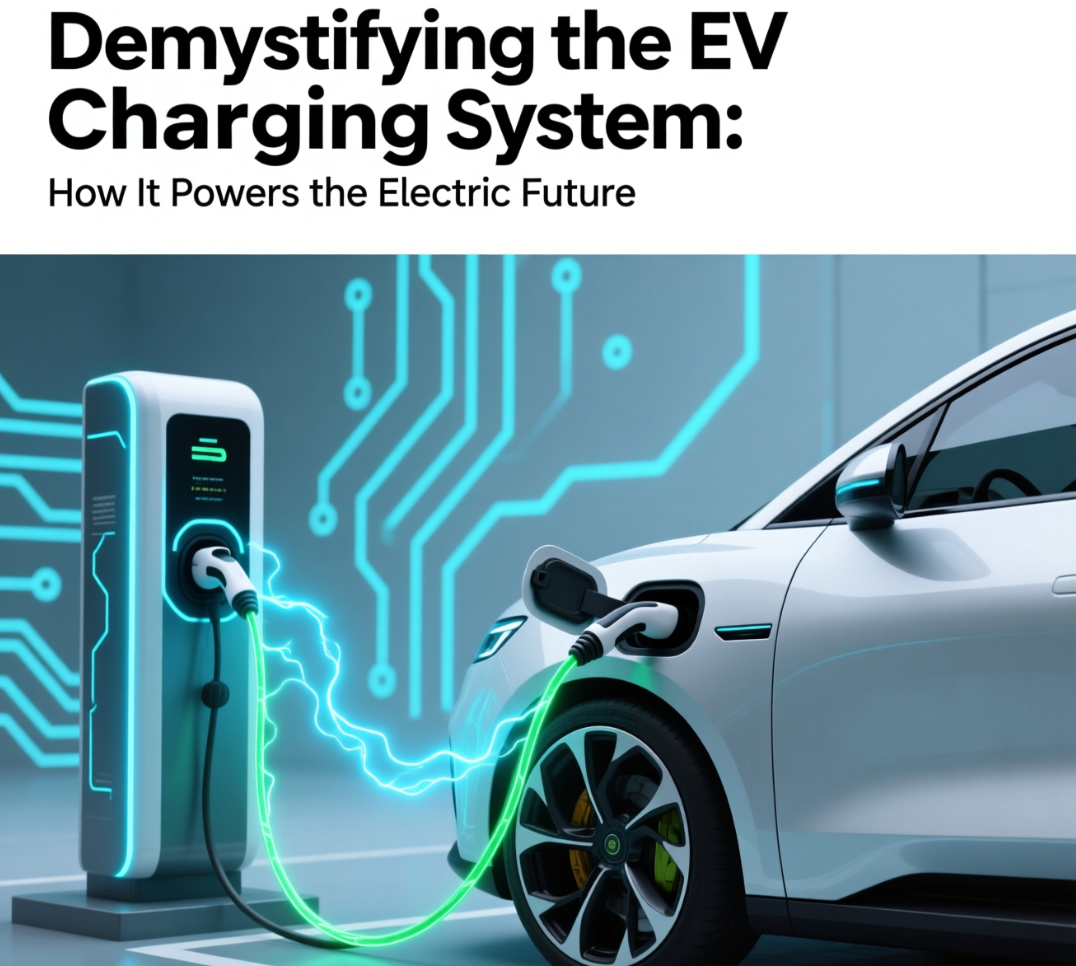
The worldwide transition to electric vehicles (EVs) is accelerating, and at the heart of this shift lies the EV charging system. Grasping what an EV charging system entails—and how it operates—is essential for drivers, businesses, and fleet managers alike. At its core, an EV charging system refers to the integrated suite of technologies designed to transfer electrical energy—from the grid or localized sources like solar arrays—safely and efficiently into an EV’s battery. Companies such as UUGreenPower are at the forefront, engineering the critical hardware that ensures these systems remain durable, efficient, and trustworthy.
Breaking Down the Architecture of an EV Charging System
An EV charging system isn’t a solitary unit but rather a coordinated ecosystem of interconnected components. These include the power source (typically the electrical grid or renewable generators), the physical charging station—also known as Electric Vehicle Supply Equipment (EVSE)—which integrates safety controls and user interfaces, the charging cable with its standardized connector, and, most importantly, the EV charging module. This internal power conversion component plays a pivotal role: it converts incoming alternating current (AC) into the exact direct current (DC) voltage and amperage required by the vehicle’s battery. The speed, efficiency, and service life of the entire charging station hinge directly on the performance and reliability of this central module, making it indispensable to any high-performing EV charging solution.
Charging Modes Compared: Where Power Conversion Happens Matters
EV charging systems function across several distinct modes, primarily differentiated by where AC-to-DC conversion occurs and what type of current is delivered. Level 1 (AC) charging uses standard residential outlets and depends entirely on the vehicle’s onboard charger—an integrated EV charging module within the car—to convert AC to DC. While practical for overnight home charging, its low power output results in extended charge times. Level 2 (AC) charging leverages higher-capacity circuits and a more capable EVSE, yet still relies on the vehicle’s onboard charger, offering substantially faster charging for both residential and public use. In contrast, DC Fast Charging (DCFC) eliminates reliance on the vehicle’s internal converter altogether. Instead, the heavy-duty AC-to-DC transformation happens inside the external charging station’s dedicated EV charging module, enabling DC power to flow directly into the battery at dramatically higher rates. This architectural distinction—specifically, the location of the power conversion process—is fundamental to understanding differences in charging speed and infrastructure complexity. Consequently, the design and power capacity of the EV charging module, particularly in DCFC units, are critical enablers of rapid refueling needed for long-distance travel and high-demand public networks.
Why the EV Charging Module Is the Linchpin of Performance
The EV charging module serves as the nerve center for power conversion. Its build quality directly influences charging velocity (across both Level 2 AC and DC fast charging), system-wide efficiency (by curbing energy loss), adherence to safety standards, and overall operational durability. In DC fast charging applications—vital for public infrastructure and intercity mobility—the demands on the module are especially intense. It must handle sustained high-power loads while maintaining fail-safe reliability and thermal stability. Therefore, integrating a truly high-performance EV charging module is not optional but essential when deploying robust, future-ready charging solutions, particularly in commercial or high-utilization settings.
More Than Just Conversion: The Module as the Intelligent Core
The role of the EV charging module extends well beyond basic AC/DC conversion—it functions as the intelligent command hub of the entire charging process. Advanced modules feature adaptive power management algorithms that optimize efficiency under fluctuating grid conditions and varying battery states, reducing waste and lowering operating expenses. They also enforce multi-layered safety measures, continuously scanning for anomalies such as overvoltage, overcurrent, overheating, or ground faults, and instantly cutting off power when risks are detected to safeguard both the vehicle and the electrical network. Moreover, modern modules support smart functionalities: enabling dynamic load balancing among multiple chargers, seamless integration with renewable energy systems and battery storage, and secure communication via protocols like OCPP for remote diagnostics, firmware updates, user authentication, and billing. Ultimately, the sophistication embedded in the EV charging module—its reliability, intelligence, safety architecture, and connectivity—defines the user experience, system resilience, and long-term viability of the entire charging infrastructure. Its technological maturity is foundational to building a scalable and sustainable EV ecosystem.
Final Thoughts
The EV charging system is the vital enabler of the electric mobility revolution. Its success depends overwhelmingly on the integrity and capability of its foundational components—especially the EV charging module. Solutions built around purpose-built, high-grade modules set a new standard for reliability and total cost of ownership, particularly in demanding operational environments. By prioritizing advanced power electronics with ruggedized design, high ingress protection, and comprehensive safety mechanisms, manufacturers can deliver the high-performance, dependable infrastructure necessary to support mass EV adoption. Choosing the right charging module isn’t just a technical decision—it’s a strategic investment in a cleaner, electrified future.
What Safety Protocols Protect EV Charging Modules From High-Voltage Surges?
2026-04-30 NextHow to Charge Your Electric Vehicle the Right Way
2026-05-18

