
2026-05-28
UUGreenPower
0
Charging modules are widely used in modern EV charging infrastructure, but their performance can be affected when deployed in harsh outdoor environments. Exposure to dust, moisture, and continuous thermal stress can gradually impact system reliability while increasing maintenance requirements over time. As outdoor EV charging applications continue to expand, ensuring stable long-term operation has become a key challenge for operators.
This article explores how the IP65 protection rating improves durability and helps charging systems maintain consistent performance under demanding conditions.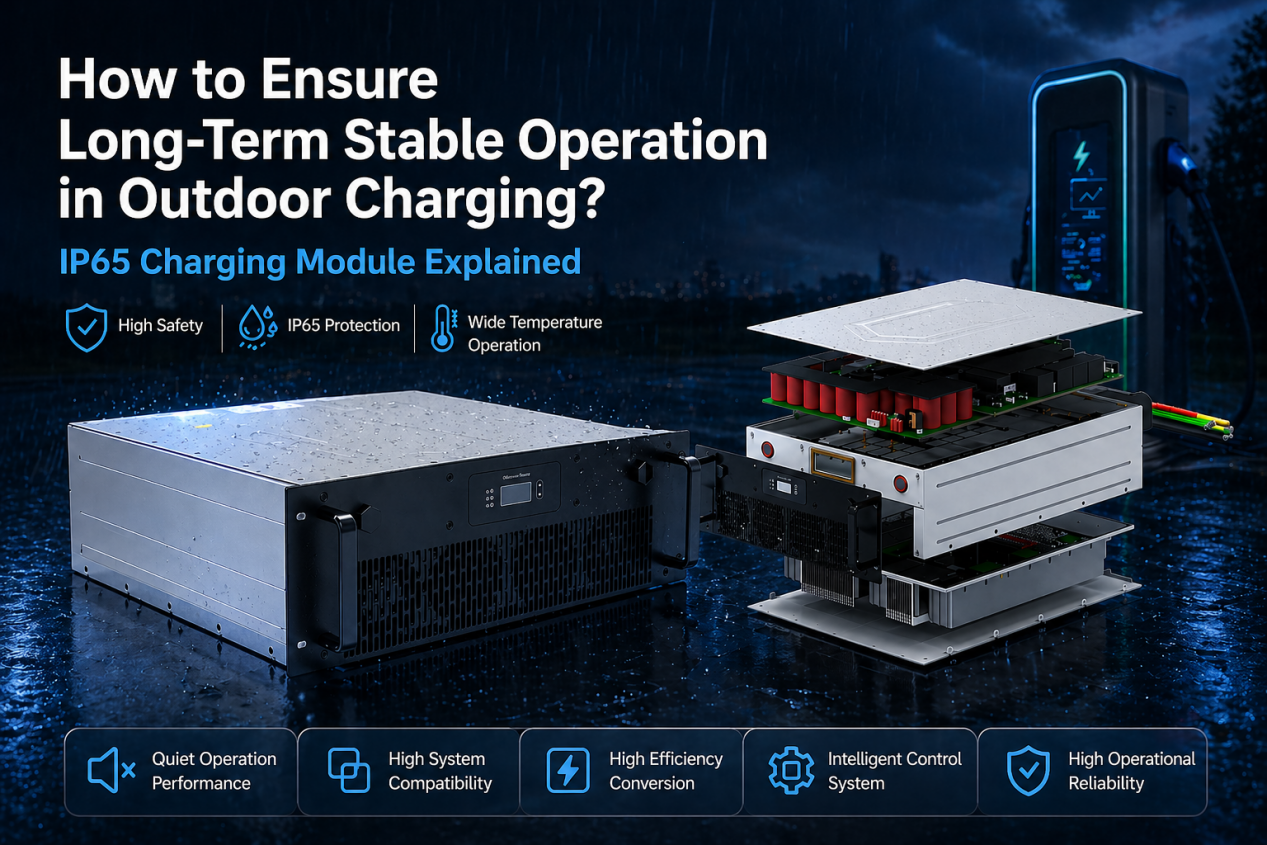
Unlike controlled indoor conditions, outdoor environments introduce multiple stressors that directly affect reliability, efficiency, and lifespan.
In environments such as highways, construction zones, or mining sites, fine dust is continuously present. Without proper sealing, these particles can enter the system, causing airflow blockage, reduced heat dissipation, and contamination of electronic components. Over time, this increases thermal stress and accelerates component aging.
Outdoor chargers are regularly exposed to rain, condensation, and high humidity. In coastal or industrial areas, salt and pollutants further intensify these effects.
These conditions affect the system on multiple levels:
At the surface, water can enter through gaps and affect connectors
Internally, long-term humidity accelerates corrosion
Electrically, insulation performance may degrade, increasing failure probability
A key challenge is that these issues often develop gradually and are not immediately visible.
Outdoor charging modules often operate under high ambient temperatures while delivering continuous high power. This combination creates sustained thermal pressure.
If heat is not effectively managed, the system may experience power derating, reduced efficiency, and faster aging of internal components.
Another factor that is often overlooked in design is accessibility. Many charging stations are deployed in locations where maintenance is not easily performed—such as highways, ports, or remote industrial areas.
In these environments, reliability becomes more important than serviceability. A system that requires frequent cleaning, inspection, or environmental management will inevitably face higher operational costs and longer downtime.
This makes environmental resilience a core requirement, not just a design preference.
As a result, the IP65 charging module has become a common and practical design choice.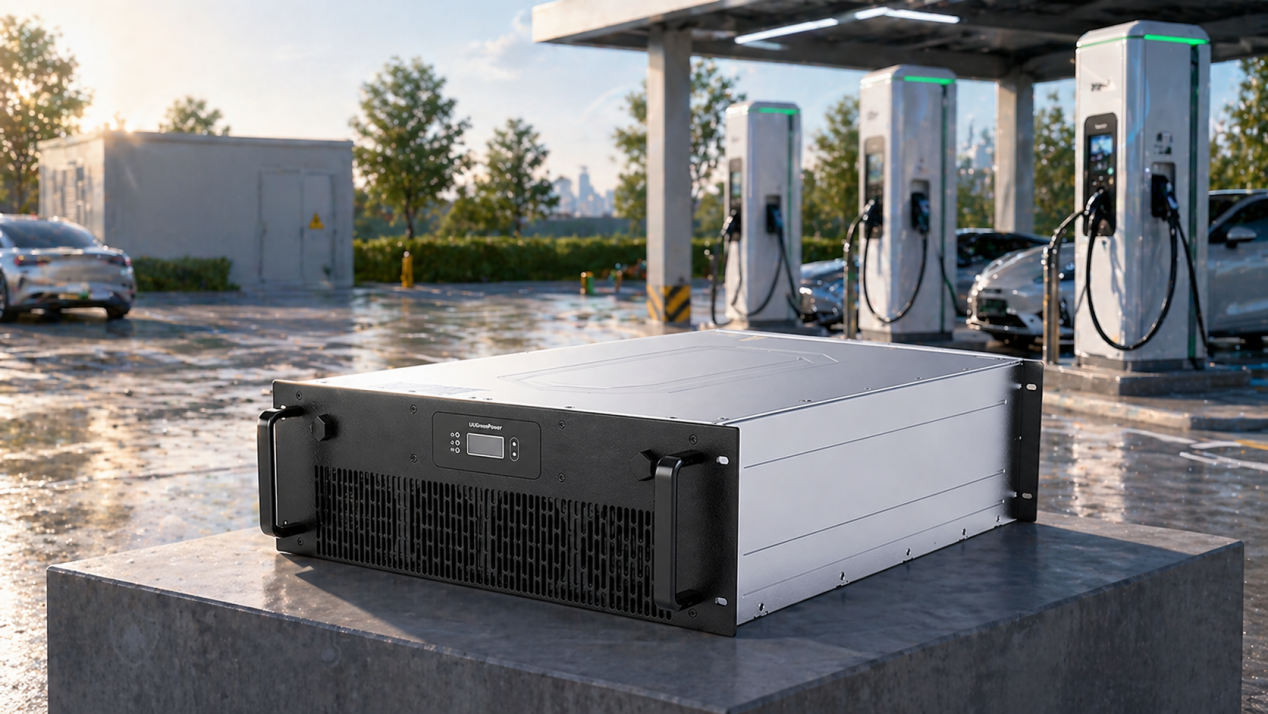
The IP rating system, defined by IEC 60529, is used to describe how well an enclosure protects against external elements. In the case of IP65, the two digits represent different types of protection.
The first digit “6” indicates complete protection against dust. This means that under normal operating conditions, no dust can enter the enclosure and affect internal components.
The second digit “5” refers to protection against water—specifically, resistance to low-pressure water jets from any direction. This covers typical outdoor exposure, such as rain, splashing, or routine cleaning.
Rather than being just a technical label, this rating directly reflects how well a charging solution can withstand real environmental conditions over time.
Read more: How Does an EV Charger Module Operate?
Traditional charging modules rely on cabinet-level protection—such as filters, fans, or sealed enclosures—to handle environmental risks. While effective in controlled or semi-outdoor environments, this approach increases system complexity and introduces additional failure points over time.
By contrast, an IP65 charging module integrates environmental protection directly into the module itself, fundamentally changing how the system responds to outdoor conditions. The differences are outlined below:
| Feature | Standard (IP20) Charging Module | IP65 Charging Module |
|---|---|---|
| Environmental Protection | Limited; allows ingress of dust, moisture, and salt spray | Completely dust-tight and resists low-pressure water jets from any angle |
| Annual Failure Rate | 1-2% (higher in harsh environments) | Significantly reduced to 0.1% |
| Expected Life Cycle | Designed life: 5–8 years Actual service life: 3–5 years* | 8-10 years or more |
| Cooling Design | Open-fan cooling; external air and contaminants pass over internal electronics | Independent air-duct, liquid cooling, or natural circulation; electronics are sealed |
| Maintenance Needs | High; requires frequent cleaning of dust filters and internal components | Low; no internal cleaning is required as electronics are isolated |
| Operating Environment | Indoor or climate-controlled areas | Harsh outdoor environments (sand, salt mist, high humidity, or condensation) |
| Total Cost of Ownership (TCO) | Lower upfront cost but higher long-term cost due to repairs and downtime | Lower TCO; can save an estimated $35,000 over 10 years for a 120kW station |
*Subject to environmental conditions
By integrating protection at the source, IP65 enables a more robust and simplified approach to outdoor charging system design.
As a result, an IP65-rated module shifts the system from:
environment-dependent operation → environment-resilient operation
In practice, IP65 charging modules are most commonly used in the following outdoor scenarios:
Ports and coastal areas: Exposed to salt spray, humidity, and strong winds
Mining and high-dust environments: Continuous particulate exposure and harsh conditions
Industrial zones: Presence of pollutants, moisture, and unstable environments
Outdoor fast-charging stations: High utilization with continuous operation
Highway service areas: Remote locations with limited maintenance access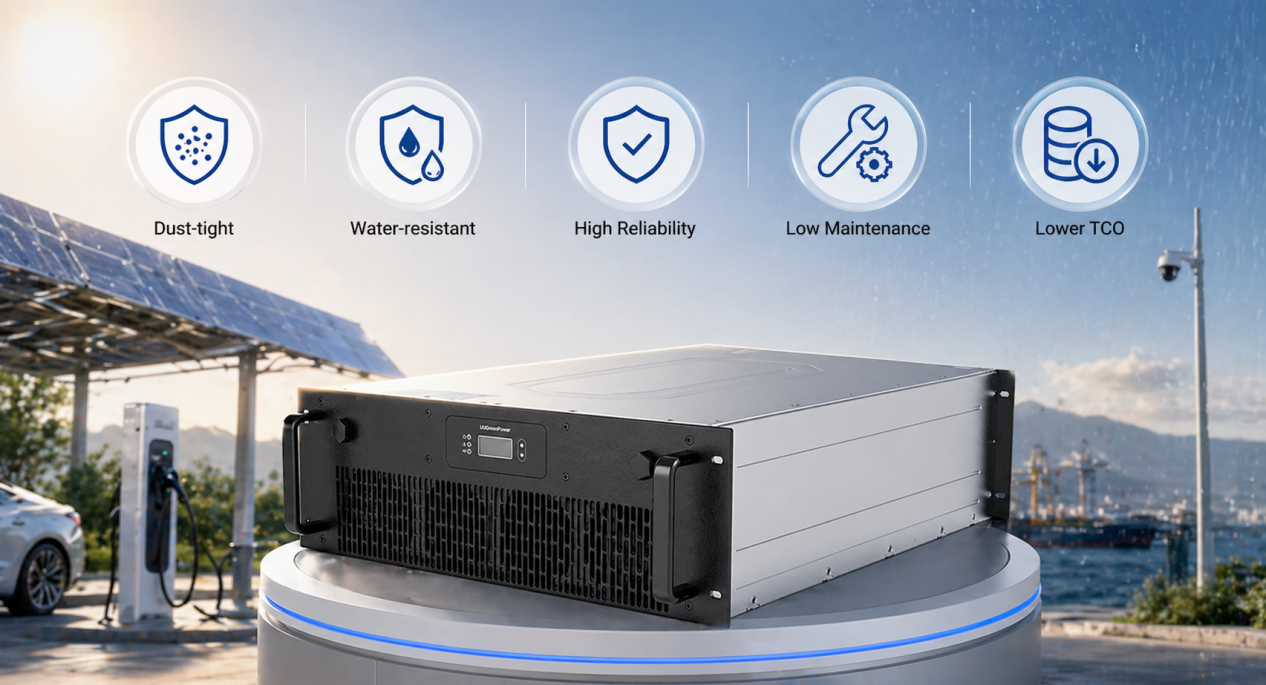
When protection is built into the module itself, the impact goes beyond durability—it directly changes how the entire charging solution is designed, installed, and operated. Taking the UUGreenPower UR100040-IP65(EU) as an example, this becomes especially clear in real deployment scenarios.
With IP65 protection, internal electrical components are effectively shielded from dust, moisture, and other environmental contaminants during prolonged outdoor operation. This enables the system to maintain stable performance in outdoor EV charging environments.
In the case of UR100040-IP65(EU), protection is achieved through an independent air duct architecture with IP65 high protection level, enabling stable operation in environments such as dust-heavy areas, salt spray exposure, and high humidity conditions.
By reducing continuous exposure to environmental contaminants, IP65 protection can help slow down long-term component aging and reduce the risk of performance degradation over extended operating cycles, thereby extending the overall service life of the system.
In UR100040-IP65(EU), long-term durability is supported by its fully sealed IP65-rated design combined with a wide operating temperature range of -40℃ to 70℃. Together, these features reduce environmental stress on internal components over time.
In outdoor environments, many failures are not caused by electrical design itself, but by long-term exposure to dust, moisture, and temperature fluctuations.
The UR100040-IP65(EU) addresses this at the source. Its IP65 sealed structure prevents dust ingress and limits moisture impact, reducing the primary causes of environmental-related failures. This allows the module to maintain stable performance even in high-humidity or high-dust conditions.
At the same time, its high efficiency (≥95% rated, up to 96% peak) helps reduce internal heat generation, which further improves stability under continuous operation.
Sealed IP65 systems reduce the need for frequent cleaning, inspection, and component replacement because internal parts are protected from direct environmental exposure. This significantly reduces routine service workload and maintenance frequency.
In UR100040-IP65(EU), maintenance requirements are further reduced due to its built-in reliability features. The complete circuit protection functions and the output current reverse prevention circuit help reduce abnormal operation risks. As a result, the likelihood of system faults is lowered, which reduces service frequency in outdoor EV charging applications and long-term charging solutions.
By combining higher reliability, fewer failures, and reduced maintenance needs, IP65 modules help lower total operational and servicing costs over the system lifecycle. This improves overall cost efficiency for outdoor charging infrastructure.
For example, UR100040-IP65(EU) supports a wide output voltage range of 150VDC-1000VDC and constant power operation up to 40kW (300-1000VDC). This wide compatibility, combined with high efficiency and high reliability design, allows charging system operators to reduce both operational energy cost and long-term maintenance expenditure, ultimately lowering overall lifecycle cost.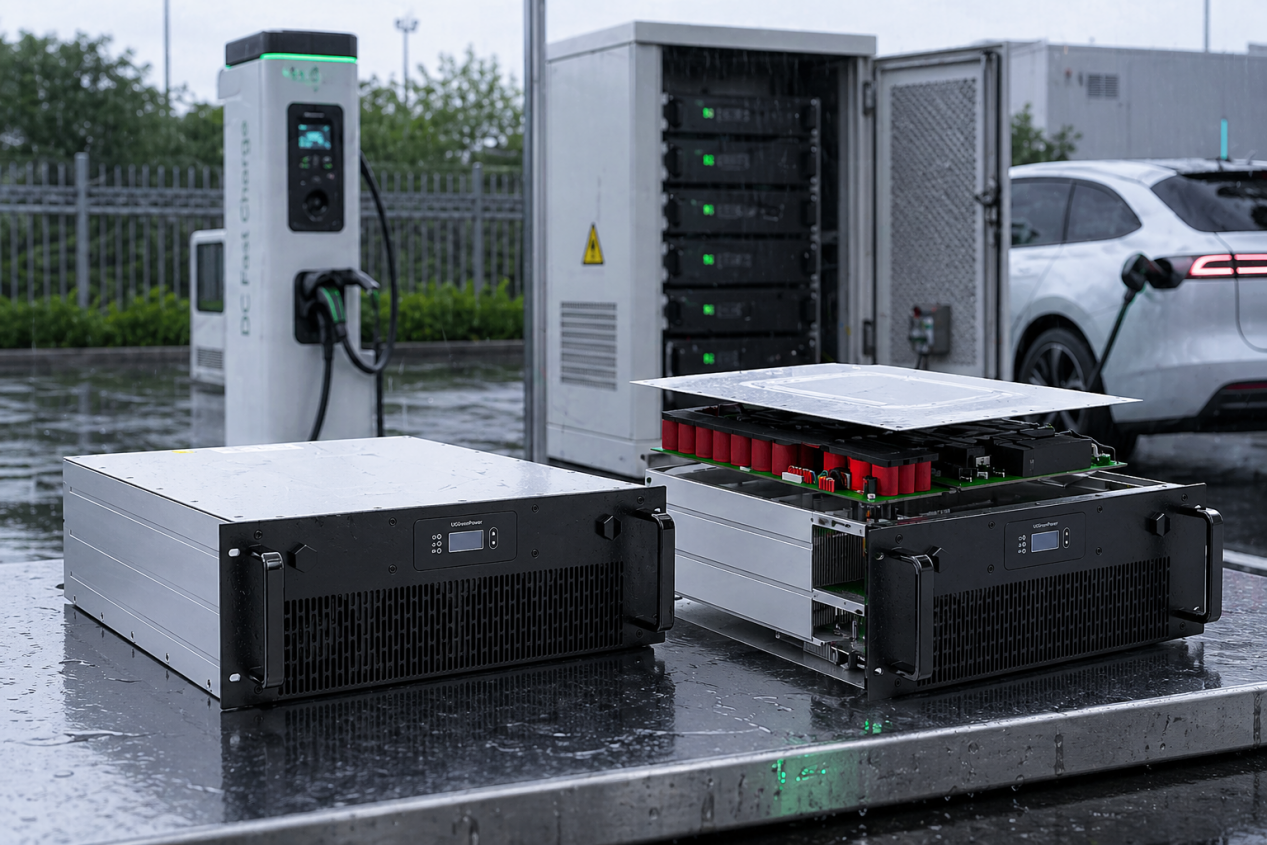
Beyond the IP65 protection rating, long-term stable operation in outdoor EV charging also relies on the module’s efficiency, compatibility, control, and reliability. UR100040-IP65(EU) is therefore built to support stable performance in outdoor EV charger and charging solution applications.
Noise control is an important factor in dense or urban EV charging environments. The UR100040-IP65(EU) is designed with optimized thermal and airflow architecture to maintain low acoustic output during operation. It achieves a noise level of ≤65dB at 25℃, making it suitable for installations where user experience and environmental comfort are important, such as commercial charging stations or residential-adjacent charging solutions.
A strong charging solution requires flexibility across different EV platforms and power architectures. The UR100040-IP65(EU) supports a wide output voltage range of 150VDC-1000VDC, enabling compatibility with a broad spectrum of EV battery systems. It also delivers constant power in the 300VDC-1000VDC range, allowing stable charging performance across different vehicle requirements and system configurations in an outdoor EV charger network.
Efficiency directly impacts energy cost and thermal performance in a charging module. The UR100040-IP65(EU) achieves peak efficiency >96% and rated efficiency ≥95%, ensuring minimal energy loss during AC-DC conversion. This high efficiency not only improves energy utilization in large-scale charging solutions but also reduces heat generation, which supports more stable long-term operation under continuous load conditions.
Modern EV infrastructure requires intelligent coordination between multiple modules. The UR100040-IP65(EU) adopts DSP-based control, enabling precise power regulation and fast response to load changes. It also supports CAN bus communication, soft grouping, and automatic address identification and verification, allowing up to 60 working modules to be managed efficiently in parallel systems. These features make it highly suitable for scalable and intelligent outdoor EV charger deployments.
For long-term outdoor operation, reliability is critical. The UR100040-IP65(EU) integrates complete circuit protection and alarm functions, along with a built-in output current reverse prevention circuit. Combined with an operating temperature range of -40℃ to 70℃ and an IP65 sealed design, it ensures stable performance in harsh outdoor EV charger environments with reduced failure risk and consistent operation.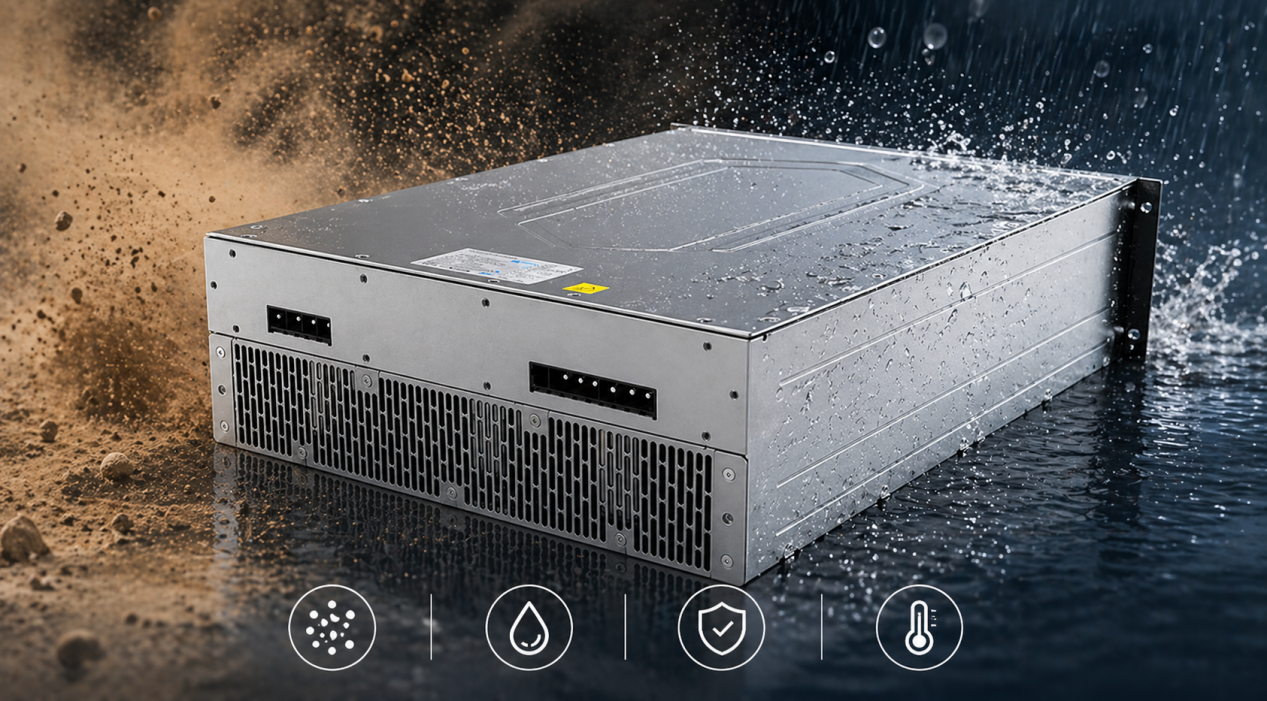
In summary, IP65 charging modules provide an optimal balance between protection, performance, and cost, making them a practical baseline for outdoor EV charging applications.
UUGreenPower has built a strong R&D system with over 40% of its workforce dedicated to engineering and continuous investment in innovation. The company focuses on key EV charging technologies such as IP65 independent airduct heat dissipation, liquid-cooling, and high-integration architectures.
Supported by 10 invention patents, multiple software copyrights, and internationally certified products (TÜV, CE, UL), its R&D capability enables high-efficiency, reliable, and long-life charging solutions for global EV infrastructure.
To learn more or explore tailored charging solutions, please contact usfor further information.
[1] https://en.wikipedia.org/wiki/IP_code
[2] https://www.charin.global/news/uugreenpower-initially-launched-the-ip65-high-protective-charging-module-globally-with-high-reliability-long-life-cycle-and-low/
[3] https://www.charin.global/news/uugreenpower-initially-launched-the-ip65-high-protective-charging-module-globally-with-high-reliability-long-life-cycle-and-low/
[4] https://thejoyfactory.com/the-ultimate-guide-to-ip-ratings-what-do-those-numbers-on-your-case-really-mean/
[5] https://www.eabel.net/knowledge-of-electrical-enclosures-en/ip54-electrical-enclosure-vs-higher-rated-enclosures/
IEC 61851-23 & EMI Class B Compliance for Charging Modules: Enabling High-Efficiency EV Charging Performance
2026-04-29 NextUUGreenPower 40kW charging module has won TüV Rhine product certification
2022-09-27

