
2026-05-23
UUGreenPower
0
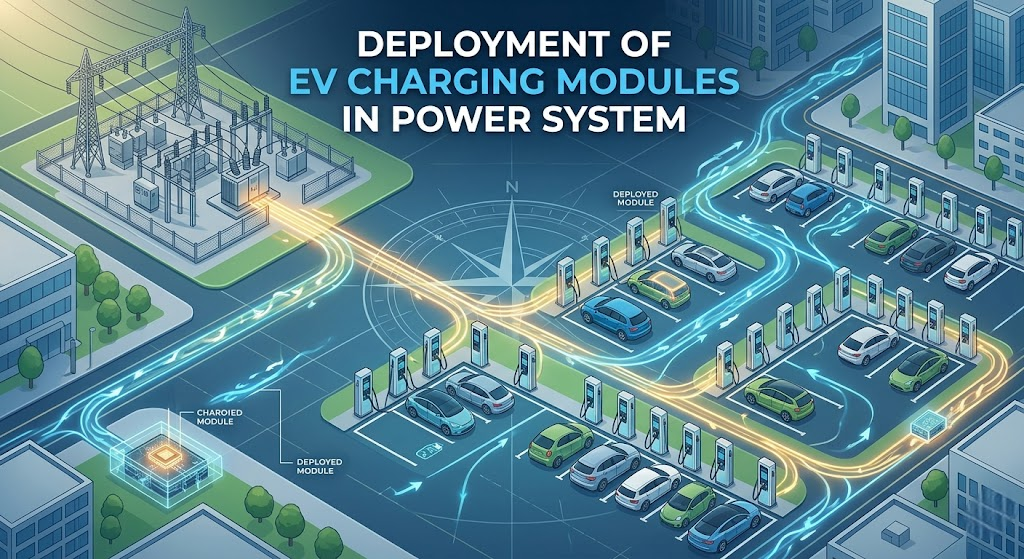
Ever wondered where the heavy lifting actually happens inside those massive charging stations? At UUGreenPower, we often get asked about the physical and functional placement of the ev charging module within a larger power grid. These units are the heart of the system, converting AC power from the grid into the DC power your vehicle's battery needs. In a standard charging cabinet, you’ll usually find these modules stacked in vertical racks. This arrangement isn't just for looks; it allows for better airflow and makes it easier to swap out a single ev charging module if maintenance is required without shutting down the entire station.
Centralized Cabinets and Power Distribution
We see the most common deployment of these components within centralized power cabinets found at highway rest stops or urban hubs. These cabinets act as a command center, housing rows of hardware that manage high-voltage throughput. Inside these structures, the ev charging module is positioned to maximize space efficiency while remaining accessible for technicians. By grouping multiple units together, the system can dynamically allocate power to different dispensers based on how many cars are plugged in. It’s a smart way to ensure that energy flows exactly where it's needed most at any given second.
Integration with Renewable Energy Storage
Another growing trend involves placing these power conversion units alongside battery energy storage systems (BESS). When we integrate an ev charging module into a system that uses solar panels or large-scale batteries, the deployment becomes more complex but much more sustainable. The modules are often located in a sub-section of the enclosure that interfaces directly with the DC busbar of the solar inverter. This setup minimizes energy loss because the power doesn't have to be converted back and forth between AC and DC as many times, keeping the thermal footprint of the entire site much lower.
Public Infrastructure and Urban Charging Points
In tight urban environments where space is a luxury, the placement of the ev charging module shifts toward compact, all-in-one pedestals. While larger cabinets are great for depots, city streets require a slim profile. Here, the hardware is often tucked into the base of the charging pole or housed in a nearby underground vault to protect it from the elements and vandalism. UUGreenPower focuses on ensuring these modules are rugged enough to handle the vibration and humidity found in these outdoor settings. Even in a smaller chassis, the module remains the critical link that ensures a stable and fast charge for every user.
To wrap things up, the physical location of the ev charging module depends entirely on the specific needs of the site, whether it's a massive highway hub or a sleek city pedestal. Proper placement ensures the system stays cool, remains easy to fix, and operates at peak efficiency. By understanding where these power blocks sit within the cabinet, operators can better plan their infrastructure for long-term reliability. We believe that thoughtful deployment is just as important as the technology itself when it comes to building a dependable charging network for everyone.
When Should Operators Replace or Upgrade an EV Charging Module in a Fast Charging Station?
2026-05-22 NextWhich Electrical Parameters Are Critical When Selecting an EV Charging Module for Industrial Use?
2026-05-24

