
2026-06-06
UUGreenPower
0
As electric mobility infrastructure continues to expand, the performance requirements placed on charging equipment are becoming increasingly demanding. At UUGreenPower, we closely follow technological developments that influence charging efficiency, system compatibility, and long-term infrastructure planning. One important topic attracting attention is the EV charging module, particularly as higher-voltage architectures become more common in commercial and public charging environments. Evaluating both the advantages and limitations of 1000V solutions helps stakeholders make informed decisions about future charging deployments.
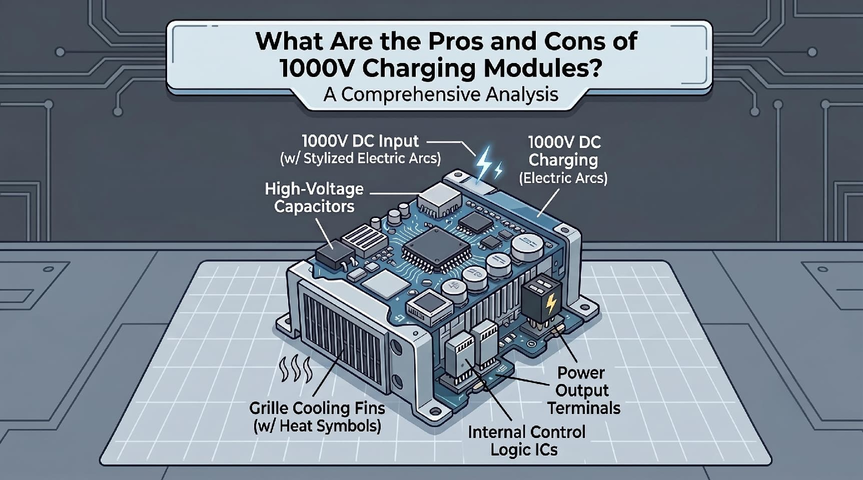
Higher Voltage Capability and Charging Performance
A major advantage of the 1000V Charging module;dc fast charging module is its ability to support vehicles and battery platforms designed for higher voltage operation. As battery technologies evolve, many manufacturers are exploring architectures that can accept higher charging voltages, enabling faster energy transfer while managing current levels more effectively. This approach can contribute to improved charging experiences for drivers, especially in applications where minimizing downtime is important.
Higher-voltage charging systems may also help reduce stress on certain electrical components by allowing power delivery through lower current levels for the same output. In large charging installations, this characteristic can support more efficient power distribution and system scalability. As charging networks continue to grow, the ability to accommodate emerging vehicle platforms becomes an increasingly valuable consideration.
Infrastructure Flexibility and Future Readiness
Another benefit associated with the ev charging module is its potential role in supporting future infrastructure requirements. Charging stations often remain in service for many years, making adaptability an important factor during planning and deployment. A charging architecture capable of supporting higher voltage ranges may offer broader compatibility with future electric vehicle developments.
At the same time, organizations should recognize that implementing advanced charging systems requires careful engineering evaluation. Grid conditions, site requirements, thermal management strategies, and equipment integration all influence overall performance. A higher-voltage design can provide flexibility, but achieving reliable operation depends on balancing multiple technical considerations. For operators planning long-term charging investments, evaluating system expansion potential is just as important as assessing immediate charging needs.
Technical Challenges and Deployment Considerations
While the 1000V Charging module;dc fast charging module offers several operational advantages, there are also challenges that should not be overlooked. Higher-voltage systems typically require components engineered to withstand greater electrical stress. This can increase design complexity and place greater emphasis on insulation performance, safety validation, and maintenance procedures.
In addition, compatibility across different vehicle platforms and charging standards must be carefully assessed. Not every electric vehicle currently operates within the same voltage range, meaning charging infrastructure providers need to consider the diversity of the market. The EV charging module remains a critical building block in modern charging systems, but its effectiveness depends on proper integration within the broader charging ecosystem.
At UUGreenPower, we recognize that technological advancement involves balancing performance opportunities with practical deployment realities. Evaluating site requirements, operational objectives, and future expansion plans helps determine whether higher-voltage charging solutions align with specific project goals.
The 1000V Charging module;dc fast charging module presents meaningful advantages, including support for higher-voltage vehicle platforms, improved charging potential, and stronger alignment with future infrastructure development. However, these benefits are accompanied by engineering, compatibility, and implementation considerations that require careful assessment. As the electric mobility sector continues to evolve, stakeholders should evaluate both the strengths and limitations of high-voltage charging architectures to ensure reliable and sustainable charging network growth.
What Should You Know About IP65 Charging Modules?
2026-06-06 NextWhy IP65 Charging Modules Are Essential for Outdoor Fast Charging Infrastructure
2026-07-10

