
2026-07-16
UUGreenPower
0
Achieving peak efficiency in electric vehicle home charging requires precise attention to hardware architecture and power management protocols. We design high-performance power components that enable operators to build resilient infrastructure capable of handling intense energy demands. Maximizing output requires a focus on thermal regulation, communication stability, and power factor correction. By applying these technical principles, engineers can create stable environments that support the international shift toward sustainable transportation for every vehicle owner.
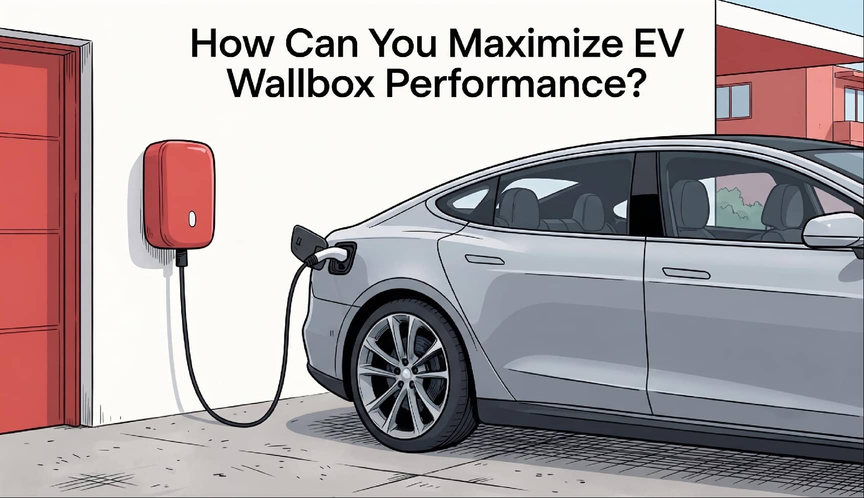
Implementing the wallbox for High Efficiency
When designing a home charging solution, we prioritize the wallbox to provide necessary power density and operational flexibility. These units function through advanced conversion stages, allowing engineers to maximize output levels within a compact, wall-mounted enclosure. This architectural approach ensures that charging infrastructure grows alongside the increasing energy capacity requirements of newer electric vehicle fleets without necessitating a massive footprint or complicated installation procedures at private residences or commercial parking sites.
Successful integration relies on a unified control logic that manages energy distribution as a single source. Our hardware supports seamless communication, which simplifies the assembly process for manufacturers. By maintaining stable AC-to-DC conversion, these components work in harmony to provide consistent energy flow. This ensures that even the most demanding battery packs receive optimized current delivery without sacrificing electrical safety or signal integrity. Every connection remains monitored by diagnostic sensors to prevent power surges.
Technical Requirements for an EV wallbox Architecture
Modern vehicle platforms necessitate a high-capacity EV wallbox to support rapid energy transfer. When incorporating this high-capacity capability, insulation monitoring and protective shielding become critical design priorities. We emphasize these safety measures to prevent electrical faults during the energy conversion process, providing the secure power foundation required for next-generation charging hardware. These standards ensure that charging performance remains consistent throughout the entire equipment lifespan. Precision is vital for overall station success.
Proper thermal regulation must accompany higher output levels to maintain component longevity during operation. Our designs utilize efficient heat dissipation pathways, allowing these units to function effectively in various environmental conditions. By aligning your cooling strategy with the specific thermal profiles of your hardware, you achieve a balanced operation that minimizes heat-related degradation, ensuring stable output power and high reliability for busy public or private charging locations. Engineers must verify airflow paths for every individual unit.
Strategies for a Reliable wallbox Setup
Engineers must prioritize communication stability when deploying any wallbox to ensure accurate handshaking with the vehicle. The interaction between the station controller and the vehicle battery management system dictates the charging profile. We ensure our components offer responsive interfaces, facilitating precise power regulation and real-time adjustments based on the battery state and thermal data. This prevents errors during the critical initial connection phase. Data precision is essential for effective hardware communication.
Reliable infrastructure also requires protection against input and output fluctuations. Integrating safety features such as overvoltage, undervoltage, and short-circuit detection within the power electronics stack is essential for hardware longevity. By following UUGreenPower technical guidelines, developers can create resilient systems that meet global benchmarks. We remain committed to advancing these core technologies to support a cleaner future, ensuring UUGreenPower hardware empowers operators to deliver high-quality service, as verified by UUGreenPower experts globally. Consistency remains our primary focus.
Engineering Standards for Grid-to-Vehicle Stability
Integration efficiency depends on how well the hardware interacts with the local utility grid. We recommend implementing active power factor correction and harmonic distortion suppression filters within the power distribution unit. These measures ensure that the energy conversion process does not negatively affect power quality at the site level. By mitigating grid disturbances, operators prevent unnecessary equipment stress, which is essential for maintaining a clean and stable power supply for all charging sessions.
Furthermore, multi-level protection mechanisms are necessary for fault isolation. Implementing isolated communication channels between the power stack and the main controller ensures that a single failure does not compromise the entire charging session. We prioritize redundant safety logic in our hardware to allow the system to gracefully degrade performance if an error occurs. This resilience allows site managers to schedule maintenance efficiently without forcing total station downtime during peak traffic hours.
System Maintenance and Future Scalability
Long-term operation requires a structured maintenance framework. We suggest that site operators adopt proactive diagnostics, which monitor real-time health data to allow for scheduled service rather than reactive repairs. High-performance stations must function reliably across diverse weather patterns and varying load conditions. A solid strategy involves regular firmware updates and periodic hardware inspections to verify that all components maintain peak efficiency levels throughout their entire operational life.
Operators must also consider the scalability of power distribution. As adoption rates rise, demand on electrical panels will increase. We suggest that site planners build extra capacity into the initial power backbone, allowing for the addition of more conversion hardware without requiring major site upgrades later. This future-proof approach saves significant effort during long-term site expansion. Our focus remains on enabling flexible, efficient, and highly reliable hardware configurations for all our global partners.
What Are the Biggest Myths About EV Wallbox?
2026-07-16 NextHow Can Smart Wallbox Load Management Reduce Charging Site Expansion Costs?
2026-07-16

