
2026-07-17
UUGreenPower
0
The integration of high-performance charging infrastructure often encounters obstacles during the final activation phase. We observe that many infrastructure operators face unexpected technical hurdles when attempting to synchronize advanced hardware with existing electrical grids. These failures frequently stem from inadequate site assessment or misaligned communication protocols between the charger and the vehicle. By addressing these critical areas early, we assist our partners in ensuring a smooth and efficient activation process for every deployment.
Addressing Site Readiness and Power Availability
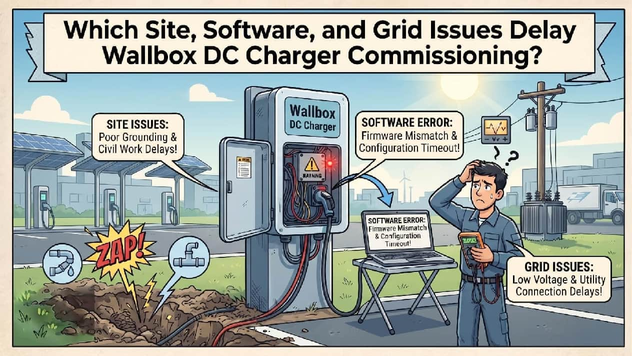
A significant reason for commissioning failure is the lack of proper site preparation before hardware arrives. Operators must verify that the utility grid can accommodate the specific power demands of a wallbox installation. If the local electrical panel or transformer capacity is insufficient for the high-power requirements of these units, the system will fail to stabilize during the initial boot sequence. We emphasize that a thorough load analysis is vital for preventing grid-related interruptions.
Furthermore, physical site conditions often disrupt the activation of a wallbox DC charger setup. Issues such as improper cable sizing, inadequate earthing, or insufficient conduit space can cause immediate hardware faults once power is applied. We recommend that contractors conduct a rigorous physical inspection to ensure all environmental and safety requirements are met. By validating these infrastructure foundations before the equipment is installed, operators avoid the frustration of troubleshooting hardware issues that are essentially site-based problems.
Resolving Communication and Software Integration Conflicts
Successful commissioning relies on the seamless exchange of data between the hardware and the backend management network. We find that software-hardware incompatibilities are a frequent source of project delays. When the management platform fails to recognize the specific identification codes of a unit, the system may prevent the initiation of charging sessions. We focus on standardized communication protocols to ensure that our technology integrates smoothly with existing cloud platforms and third-party monitoring software.
Incomplete firmware configuration also prevents units from becoming fully operational. When technicians fail to perform necessary software updates or misconfigure authentication settings, the system may refuse to communicate with the electric vehicle or the central cloud. We provide comprehensive technical documentation to help technicians verify settings during the setup process. Ensuring that all digital connections are active and properly handshake-tested before departure is essential for achieving a reliable and fully functional charging installation.
Mitigating Environmental and Thermal Factors
Environmental stressors play a massive role in hardware performance during the initial trial phase. If a unit is exposed to direct sunlight without proper ventilation, or if it lacks sufficient clearance for airflow, thermal protection triggers may prevent startup. We suggest that site planners conduct thermal simulation studies to ensure the enclosure environment remains within specified temperature ranges. Proper positioning and shielding are critical factors that technicians often overlook during the intense final installation hours.
Humidity and particulate matter also pose risks to high-voltage electronics. If the equipment is commissioned in an area prone to high moisture levels, internal components may experience condensation, leading to insulation resistance errors. We recommend that installers verify the ingress protection seals and ensure that all glands are tightened correctly. Taking the time to environment-proof the installation site during the setup phase significantly reduces the likelihood of intermittent faults that could cause a total system shutdown.
Optimizing Utility Interconnection and Safety Protocols
Interconnection safety represents a complex hurdle that requires deep cooperation with utility providers. Many commissioning failures occur because the protection settings on the charging hardware do not align with the utility’s local requirements. We observe that discrepancies in voltage monitoring ranges or frequency response thresholds often cause the hardware to enter a lockout state. Ensuring that all safety relay configurations match local grid codes is a critical step in reaching total system readiness.
Documentation accuracy is another area where project teams struggle. Regulators often demand precise proof of compliance regarding electrical safety and emergency stop functionality. When the commissioning team lacks the correct certification documents, the activation process stalls indefinitely. We prioritize clear, comprehensive compliance documentation to assist our partners in navigating the administrative side of infrastructure projects. By preparing these files well in advance, operators can ensure that every inspection requirement is met without unnecessary delays or technical rejection.
UUGreenPower Perspective on Deployment Success
For businesses planning future-proof networks, the selection of hardware is a fundamental step in avoiding commissioning failures. UUGreenPower provides technical solutions designed to balance performance with ease of integration in diverse environments. When we implement these high-power solutions, we assist partners in verifying that every component meets rigorous electrical standards. Our focus on quality ensures that infrastructure remains operational, providing a dependable foundation for the growth of sustainable mobility across various geographic locations.
We believe that professional coordination between hardware suppliers, software providers, and onsite contractors is the most effective path forward for any charging network project. By committing to excellence in component manufacturing and support, UUGreenPower remains a dedicated partner for energy providers. Our ongoing commitment to innovation ensures that our hardware supports the global transition, providing the stable power delivery necessary to build reliable, high-capacity networks that function correctly from the moment of activation.
Ensuring Reliability in Modern Networks
The move toward higher voltage infrastructure is essential for the future of sustainable mobility. By deploying an advanced wallbox, operators can meet the needs of next-generation vehicles while maintaining high throughput. While the technical complexity of a wallbox DC charger is greater, the benefits in efficiency and compatibility are clear. We remain dedicated to delivering a wallbox DC charger that empowers infrastructure providers to succeed, and UUGreenPower continues to facilitate this transition globally through innovative power electronics that meet the rigorous demands of modern electrical grids.
What Challenges Do Companies Face When Deploying Wallbox Car Chargers?
2026-07-17 NextHow Does a V2G EV Charger Solution Benefit EV Charging Operators?
2026-06-12

