
2026-07-20
UUGreenPower
0
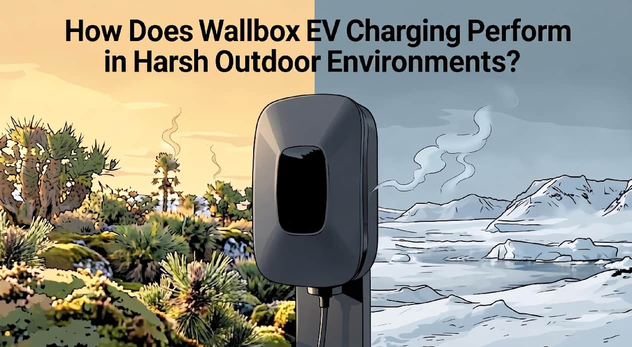
Electric vehicle infrastructure often requires placement in exposed locations, exposing hardware to rain, dust, and significant temperature swings. We recognize that equipment longevity depends on the ability of internal electronics to remain sealed and protected from external elements. As charge point operators deploy stations in diverse regions, high-level ingress protection becomes a mandatory feature. This article explores how durable hardware maintains consistent performance when subjected to difficult, non-indoor conditions throughout its operational lifecycle and diverse climate demands.
The Role of a Wallbox in Resilient Infrastructure
High-performance charging hardware must endure continuous exposure to the elements without degrading. A wallbox provides a compact and durable solution for outdoor sites where space is limited and weatherproofing is non-negotiable. By utilizing robust enclosures, these units prevent the ingress of fine particulates and moisture, which are primary causes of electrical failure. Reliable hardware designs ensure that internal power components remain functional even when ambient conditions fluctuate drastically over time or across different geographic regions.
Effective thermal management is also critical for hardware stationed outdoors. We emphasize the use of independent air-duct heat dissipation, which allows units to maintain operational stability despite extreme heat or humidity. By preventing the accumulation of condensation and heat within the casing, this engineering approach extends the functional life of the station. Such hardware ensures that vehicle owners receive a consistent energy transfer, regardless of whether the site experiences intense summer sunlight or heavy seasonal rainfall.
Ensuring Reliability via Wallbox EV Charging
Consistent uptime is the objective for any infrastructure operator. When implementing wallbox EV charging solutions, the focus remains on achieving high protection ratings, such as IP65 or higher, which signify total resistance to dust and protection against low-pressure water jets. This level of defense is vital for ensuring that electronic circuits do not corrode or short-circuit during storms. We provide hardware that meets these stringent international benchmarks, guaranteeing that outdoor installations remain safe and operational for years.
Advanced protection also includes resistance to salt spray and corrosive atmospheres, which are common in coastal regions. By employing specialized coatings and sealed internal designs, manufacturers can prevent environmental agents from damaging sensitive control boards. We build our power components to withstand these challenges, ensuring that infrastructure remains stable. This focus on durability reduces the necessity for frequent site visits, allowing operators to maintain their networks with greater efficiency and fewer technical interventions during winter or summer months.
Managing Environmental Stress and Electrical Integrity
Outdoor electrical systems face constant threats from transient voltage spikes caused by lightning or grid instabilities exacerbated by humidity. To protect the investment of infrastructure operators, modern hardware must incorporate advanced surge protection. This feature limits transient overvoltages, ensuring that sensitive power electronics do not sustain damage during weather-related electrical disturbances. UUGreenPower incorporates these defensive measures into our hardware designs, recognizing that the electrical stability of the unit is just as important as its physical weatherproofing.
Furthermore, material selection plays a pivotal role in long-term resilience. The use of high-grade gaskets and UV-stabilized materials prevents the housing from becoming brittle due to sun exposure or cracking during freeze-thaw cycles. By carefully engineering the seals around cable entries and connector interfaces, we ensure that the entire assembly maintains its integrity over years of use. This rigorous attention to material science ensures that equipment stays protected against water intrusion, condensation, and common environmental contaminants.
Intelligent Thermal Control for Consistent Output
Temperature extremes present a significant barrier to efficient energy transfer. In freezing conditions, electronic efficiency can decrease if internal components are not properly warmed or insulated. Conversely, high heat can trigger derating, where the charger reduces its power output to protect itself. We utilize intelligent thermal management to balance these extremes, employing firmware-based algorithms that adjust internal cooling dynamically. This keeps the power conversion process efficient even when the ambient temperature is outside the ideal operational range.
Maintaining consistent power delivery requires that the hardware can dissipate heat effectively. Our approach involves isolating heat-generating power electronics from the control boards, which are more sensitive to temperature fluctuations. This physical separation, combined with active thermal monitoring, allows the station to operate at its peak rated capacity for longer durations. This reliability is essential for supporting the needs of modern electric vehicle fleets that require rapid and predictable charging sessions across various deployment sites globally.
Future-Ready Infrastructure for Global Deployment
The growth of sustainable transportation depends on the reliability of the charging network. Manufacturers that prioritize sealed, weather-resistant designs are better positioned to meet the expectations of modern energy utilities and fleet managers. UUGreenPower continues to deliver hardware solutions that enhance the reliability of outdoor sites, ensuring that every installation is equipped to handle the rigors of the environment. Our commitment to innovation supports the steady growth of electric transportation across various geographic regions, providing the foundational hardware for success.
By focusing on core engineering, we empower partners to construct networks that are ready for diverse climate demands. As the industry moves toward more sophisticated grid integration, having a foundation of high-protection components ensures that infrastructure remains functional. Through dedicated research and development, UUGreenPower aims to support the collective goal of making electric vehicle charging a seamless reality for all users, providing the power that moves the world reliably, no matter the specific outdoor environment or weather challenge.
What Are the Most Common Faults in Wallbox DC Chargers and How Are They Solved?
2026-07-20 NextWhat Communication Standards Are Used in V2G Technology Systems?
2026-06-13

