
2026-05-27
UUGreenPower
0
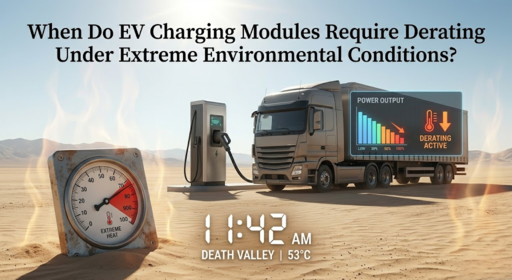
High temperatures and thin air create a tough environment for power electronics, often forcing systems to scale back performance to stay safe. At UUGreenPower, we see how environmental stressors impact the internal components of an ev charging module, making thermal management a top priority for hardware reliability. Derating is essentially a protective measure where the output power is reduced to prevent overheating or electrical failure when external conditions exceed standard operating ranges.
Thermal Limits in High-Ambient Heat
Heat is the primary enemy of efficient power conversion, and most hardware has a specific ceiling before it must throttle down. When the surrounding temperature climbs past a certain threshold—often around 50°C or 55°C—the internal fans and heatsinks of an ev charging module can no longer dissipate heat fast enough to maintain full load. We design our systems to handle rigorous duty cycles, but physics dictates that the internal circuitry must pull back to avoid permanent damage to capacitors and semiconductors.
High Altitude and Air Density Challenges
Operating at high elevations introduces a different set of variables because the air is thinner and less effective at carrying heat away. Because the cooling capacity of forced air decreases as altitude increases, an ev charging module might require derated operation starting as low as 2,000 meters above sea level. Thinner air also has a lower dielectric strength, meaning the insulation gaps within the power unit have to work harder to prevent arcing, which is why we monitor these environmental elevations closely during deployment.
Ensuring Long-Term System Reliability
Proactive derating is not a sign of weakness in the hardware, but rather a sophisticated way to extend the lifespan of the entire charging station. By intelligently reducing the current during peak heat or low-pressure scenarios, we ensure that every ev charging module remains within its "safe operating area" to prevent unplanned downtime. UUGreenPower focuses on creating robust thermal paths so that these derating curves are as shallow as possible, keeping the power flowing even when the weather gets intense.
Maintaining a steady energy flow requires a deep grasp of how environmental variables shift electrical behavior. While extreme conditions are inevitable in global deployments, the right engineering ensures that your infrastructure stays functional without burning out. Knowing exactly when and why these shifts occur helps operators plan for more resilient energy networks.
How Do EV Charging Modules Achieve Load Sharing in Parallel Configurations?
2026-05-26 NextWhere Can EV Charging Modules Be Integrated Beyond Public Charging Stations?
2026-05-28

