
2026-05-26
UUGreenPower
0
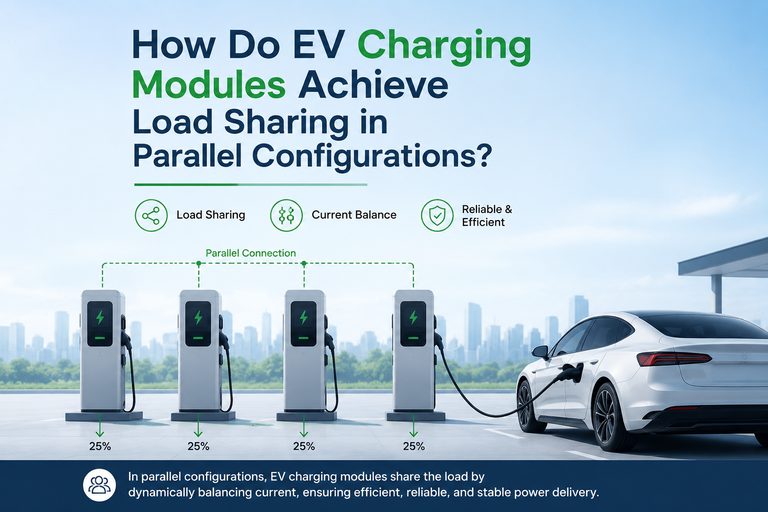
High-power charging stations rely on a team effort rather than a single powerhouse. When we design these systems at UUGreenPower, we focus on how multiple units work together to deliver consistent energy to a vehicle's battery. An ev charging module doesn't just sit there alone; it connects with others to handle massive electrical demands. This process, known as parallel configuration, allows a station to scale up its power output significantly. However, getting several units to play nice and share the workload equally is the real technical challenge that defines a reliable charging station.
Mastering the Art of Current Balancing
Achieving a balanced workload starts with sophisticated communication between every ev charging module in the rack. Without a coordination strategy, one unit might take on too much stress while others stay idle, which shortens the lifespan of the hardware. We use digital control loops that monitor the output current of each individual component in real-time. By constantly adjusting the voltage reference, the system ensures that the total demand is divided proportionally. This prevents any single piece of equipment from overheating or failing due to an uneven electrical burden.
Implementing Digital Communication Protocols
Communication is the backbone of any parallel setup involving an ev charging module. Most modern systems utilize a CAN bus or similar high-speed data links to sync the units. This network allows a "master" controller to broadcast instructions, ensuring every unit stays in phase and maintains the same output characteristics. If a vehicle requests a sudden jump in power, the digital interface tells every ev charging module to ramp up simultaneously. This synchronized response is what keeps the power flow smooth and prevents ripples that could interfere with the sensitive electronics inside an electric car.
Maintaining System Stability and Redundancy
Reliability in a B2B environment means the charging process shouldn't stop just because one component has an issue. When an ev charging module is configured in parallel, the system gains a layer of protection through redundancy. If one unit detects an internal fault, it can disconnect itself without taking the entire station offline. The remaining units simply recalculate the load sharing to fill the gap. At UUGreenPower, we prioritize this "hot-swap" capability because it ensures that fleet operators and station owners face minimal downtime while maintaining high efficiency across the entire power block.
The mechanics of load sharing are what make modern fast-charging infrastructure possible. By focusing on precise current balancing, robust digital communication, and built-in redundancy, we can create systems that are both powerful and resilient. Every ev charging module works as part of a collective, ensuring that energy delivery is handled with the precision required for heavy-duty use. Moving forward, as power demands grow, these parallel configurations will continue to be the standard for building dependable, high-capacity charging networks that keep the world moving.
Why Is High Power Density Important in Modern EV Charging Module Design?
2026-05-25 NextWhen Do EV Charging Modules Require Derating Under Extreme Environmental Conditions?
2026-05-27

