
2026-06-02
UUGreenPower
0
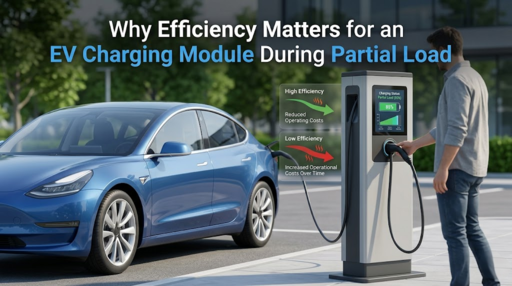
Consistency in power delivery is a common challenge for station operators, especially when a vehicle is nearly full or when multiple cars share a single source. Every ev charging module is designed to hit peak efficiency at a specific output level, but in the real world, vehicles rarely pull maximum power for the entire duration of a session. As the battery state-of-charge increases, the demand drops, forcing the hardware to operate at a fraction of its capacity. At UUGreenPower, we recognize that maintaining high performance during these lulls is essential for reducing energy waste. By optimizing how the internal circuitry handles lower currents, we ensure that the system remains productive throughout the entire charging curve, not just at the start.
Implementing Intelligent Phase Shedding for Better Performance
One way an ev charging module maintains its edge is through the strategic management of internal power stages. When demand is low, keeping every internal component running at full tilt actually creates unnecessary energy loss. We utilize a technique where specific power phases are deactivated when they aren't needed, allowing the remaining active sections to run closer to their ideal load point. This prevents the "efficiency drop-off" that typically happens when high-power electronics are underutilized. This granular control allows the hardware to adapt in real-time to the vehicle's request, ensuring that every kilowatt pulled from the grid is transferred with as little resistance as possible.
Optimizing Switching Frequency and Magnetic Design
Refining the internal switching behavior of an ev charging module is another critical factor in managing partial loads. At lower power levels, switching losses—the energy lost every time a transistor turns on or off—can become a significant percentage of the total energy used. We focus on advanced control algorithms that adjust these frequencies dynamically based on the current load. This is paired with high-quality magnetic components designed to minimize core losses even when the current flow is minimal. By focusing on these technical details, we can keep the conversion process smooth and effective, regardless of whether the car is pulling 30kW or just 3kW as it tops off.
Sustaining Thermal Stability Across All Power Levels
Reliability and efficiency are closely linked to how an ev charging module manages its thermal footprint during lighter duty cycles. Even at partial load, maintaining an even temperature distribution is vital for preventing the internal components from drifting outside of their high-efficiency zones. We design our cooling paths and sensor arrays to stay responsive even when the fan speeds are low, ensuring that the hardware doesn't experience unnecessary thermal cycling. This steady environment helps the semiconductors maintain their performance characteristics over time. UUGreenPower prioritizes this thermal balance to ensure that our equipment stays dependable and efficient, providing a consistent experience for operators who need their infrastructure to work perfectly under any load condition.
Achieving high efficiency isn't just about the peak numbers on a spec sheet; it is about how the hardware behaves in every possible scenario. An ev charging module that can handle partial loads with the same precision as a full load provides a more sustainable and predictable energy solution. By focusing on phase management, switching optimization, and thermal control, we help our partners maximize their operational results. This level of technical depth ensures that as the market for electric mobility grows, the underlying infrastructure is ready to handle the varying demands of a diverse vehicle fleet. Staying efficient at every stage of the charge is the most practical way to build a resilient and effective power network for the future.
Why Is Electromagnetic Compatibility Critical in EV Charging Module Operation?
2026-06-02 NextBalancing Reliability with Redundant EV Charging Module Integration
2026-06-03

