
2026-06-05
UUGreenPower
0
As the transition toward electric transportation accelerates, we at UUGreenPower recognize that technical precision remains the foundation for reliable infrastructure. Maximizing energy conversion rates is not merely about power throughput; it is about ensuring that every kilowatt drawn from the grid reaches the vehicle with minimal loss. When we approach infrastructure design, our primary focus remains on the thermal management and power conversion topologies that define a highly efficient EV charging module. By refining these internal processes, operators can ensure that their hardware remains functional and productive over the long term.
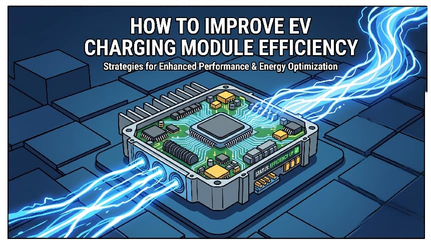
Optimizing Power Conversion Stages
The conversion process within a power unit is where most energy dissipation occurs. To enhance the performance of an ev charging module, we must pay close attention to the switching components and the electromagnetic compatibility design. Our engineering perspective suggests that utilizing wide-bandgap materials allows for faster switching frequencies while simultaneously reducing heat generation. By minimizing these losses during the conversion phase, we improve the overall duty cycle of the hardware. Maintaining a steady flow of energy is critical, as it ensures that the highly efficient EV charging module operates within its ideal performance range regardless of external grid fluctuations.
Thermal Management and Reliability
Heat management acts as a major constraint on performance. If internal temperatures rise too rapidly, the hardware must throttle output, which diminishes the utility of the charging site. We believe that integrating advanced cooling strategies directly into the architecture allows for higher power density without compromising component lifespan. Effective heat dissipation directly supports the stability of an EV charging module, enabling it to function consistently under various environmental conditions. When we implement these robust thermal solutions, we ensure that the system avoids premature wear and continues to provide consistent results for drivers who rely on high-speed infrastructure.
Advanced Control Algorithms
The logic governing the flow of electricity is as important as the physical hardware itself. Implementing sophisticated control algorithms allows the system to adjust dynamically to the demands of the vehicle and the limitations of the grid. By fine-tuning these software parameters, we can achieve a more responsive energy transfer process. An EV charging module that utilizes smart control strategies will naturally perform better than one relying on static operation. This granular level of control is what allows UUGreenPower to push the boundaries of current technology, ensuring that modern infrastructure meets the rigorous demands of the growing electric fleet.
Sustaining Future Infrastructure Performance
Achieving optimal performance requires a holistic approach that balances hardware capability with intelligent software management. By focusing on thermal efficiency and precise switching, we can significantly improve the performance of every unit in the field. A highly efficient EV charging module represents a commitment to technical excellence and operational reliability. We remain dedicated to these principles, ensuring that the hardware we support contributes to a stable and effective charging ecosystem for years to come.
Why Are DC Power Modules Important for EV Charger Manufacturers?
2026-06-05 NextHow to Optimize Liquid Cooling Module Performance
2026-07-09

