
2026-07-10
UUGreenPower
0
Infrastructure operators often analyze enclosure ratings to ensure longevity in diverse field conditions, and we recognize that hardware specifications directly influence operational reliability throughout the site lifecycle. Assessing the technical divergence between these two standards is essential for building resilient charging networks, particularly when specifying an EV charging module that must withstand temperature swings, humidity, and particulate exposure. Our engineering focus helps partners distinguish between protection levels to meet specific environmental requirements without over-engineering their hardware specifications. This clarity is vital for maintaining the stability of the global energy grid. Reliability begins with selecting components designed to perform under pressure. Every site demands specific engineering considerations for sustained performance.
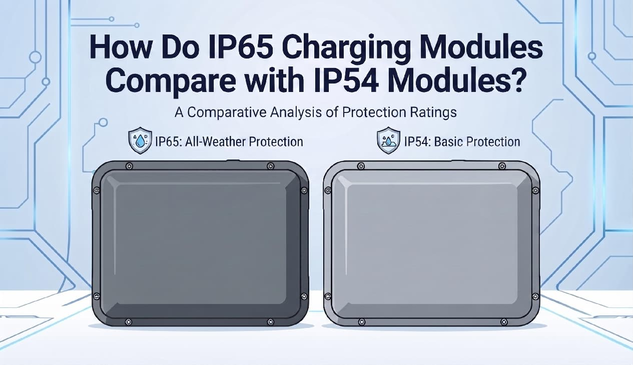
Technical Performance of an IP65 Charging module
An IP65 Charging module provides dust-tight protection and shields internal components against low-pressure water jets from any direction. This level of ingress protection is vital for installations in harsh environments, such as coastal areas with salt fog, dusty construction sites, or regions experiencing heavy rainfall. By sealing the electronics effectively, this design prevents the accumulation of conductive contaminants that often cause hardware failure. Such protection ensures that the power output remains constant regardless of the ambient humidity levels. Effective environmental sealing prevents internal short circuits during intense weather events.
When comparing these two standards, the primary difference lies in the level of defense against particulate matter and fluid spray. While an IP54 unit offers basic protection against splashing water and limited dust ingress, it remains vulnerable in extreme weather or high-pollution zones. Conversely, an IP65 EV charging module offers a more robust barrier against exterior elements, ensuring that sensitive power electronics remain clean and functional throughout their service life. This durability is necessary for sites exposed to wind-blown debris or varied precipitation. Advanced sealing mechanisms provide superior defense against moisture penetration in volatile environments.
Operational Benefits and Environmental Resilience
For many operators, deploying an IP65 charging module translates into reduced maintenance cycles and higher uptime. Because our designs prioritize environmental resilience, these units maintain stable performance even when exposed to severe weather patterns. By minimizing the frequency of cleaning or component replacement, operators secure a more predictable operational environment, which is critical for high-traffic public charging stations that require continuous service availability. Reliable uptime serves as the foundation for the business growth of any serious network operator. Consistency defines our core values. We ensure that every power solution facilitates smooth vehicle charging operations.
The decision to implement higher-rated enclosures should align with the specific site profile rather than a one-size-fits-all approach. For indoor or semi-outdoor installations, the standard IP54 rating frequently provides adequate protection. However, we advocate for advanced ingress protection in fully exposed, open-air environments. This strategic hardware deployment prevents the slow deterioration of internal systems caused by humidity, condensation, or environmental debris, ensuring long-term value for charging infrastructure. Correct physical protection is a direct factor in the overall lifespan of the hardware. Strategic placement remains essential for success. Operators must evaluate site exposure before hardware procurement.
Engineering Perspectives on Infrastructure Protection
The engineering team at UUGreenPower emphasizes that the choice between these standards hinges on the intended deployment site. A system rated for IP54 usage relies on standard filtration, which may require periodic inspection to ensure airflow is not compromised by dust buildup. In contrast, higher-rated sealed designs isolate internal circuitry from the external atmosphere, which is a major advantage for sites lacking frequent manual oversight or those located in extreme climates. Protecting internal components from thermal stress remains a key engineering challenge. Innovation requires precise hardware engineering. Engineers must balance heat dissipation with total component isolation effectively.
We assist developers in evaluating the actual ingress risks at their installation sites to determine the necessary protection level. By integrating our extensive R&D experience, UUGreenPower provides technical clarity on why specific sealing technologies are required for long-term stability. This analytical approach allows our clients to build stations that withstand the test of time, ensuring that the hardware remains consistent with the increasing global demand for reliable, sustainable, and high-performance energy infrastructure. Detailed site audits often reveal that higher protection standards are justified. Quality remains our focus. Robust protection protocols prevent premature system degradation in complex outdoor conditions.
Strategic Planning for Reliable Charging Networks
Successful deployment depends on matching hardware specifications to the harshness of the local climate. UUGreenPower supports partners by providing deep insights into how enclosure design influences the total operational lifespan of charging stations. By analyzing the interplay between cooling requirements and ingress protection, we help stakeholders build robust networks that serve the public efficiently. Providing reliable power solutions remains our core mission as we continue to advance the industry. Every component must function in unison to support the evolving needs of the electric vehicle ecosystem.
Infrastructure must evolve to meet future mobility demands. We believe that detailed environmental analysis is the most effective way to optimize site performance. By focusing on durability, we enable our partners to deploy hardware that functions perfectly regardless of geographic challenges. The integration of high-performance electronics into protected enclosures ensures that every charging session proceeds without interruption. We are dedicated to providing the necessary power solutions to support this global transition toward sustainable energy. Our engineering output reflects our commitment to long-term performance and reliability for every client worldwide. Ensuring total grid stability remains the primary goal for all modern infrastructure planning initiatives.
Why IP65 Charging Modules Are Essential for Outdoor Fast Charging Infrastructure
2026-07-10 NextHow Do 1000V Charging Modules Balance Higher Power with Safety and Thermal Demands?
2026-07-10

