
2026-07-10
UUGreenPower
0
The rapid evolution of electric vehicles demands higher energy throughput, pushing infrastructure providers to adopt advanced high-voltage architectures. Modern systems now rely heavily on a DC fast charging module to handle these increased power requirements effectively. By transitioning to higher voltage levels, grid operators and site planners can achieve greater energy transfer rates and significantly reduce charging times. However, this technical shift necessitates precise hardware validation, thermal management, and robust electromagnetic compatibility design. We explore the implications of this progression, balancing performance gains with the engineering challenges—such as insulation coordination and component stress—inherent in high-voltage infrastructure, all while ensuring that the DC fast charging module remains the critical enabler of reliable, ultra-fast charging networks.
Engineering Benefits of a High-Voltage Architecture
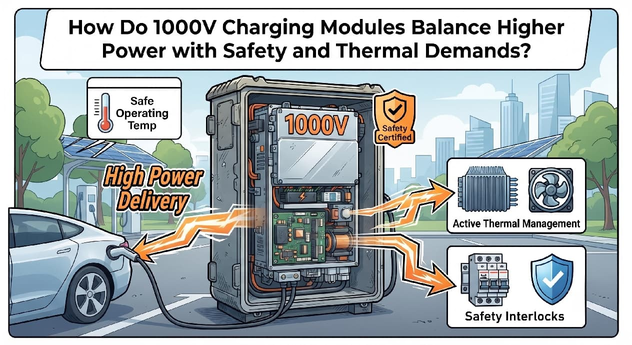
Adopting a 1000V Charging module offers distinct advantages for current charging station designs. These units provide an expansive output voltage range, ensuring seamless compatibility with various high-voltage battery platforms found in contemporary electric vehicles. Furthermore, the ability to maintain consistent power delivery over a wider voltage spectrum allows for more efficient energy conversion, minimizing energy dissipation during the charging process. This capability significantly reduces the time required for energy replenishment, which serves the needs of commercial fleets and long-distance drivers.
High-voltage designs also contribute to a reduction in thermal stress across the internal components of the charging station. By managing power at higher voltage levels, the current demand is minimized, which leads to less resistive heating within cables and connectors. This thermal efficiency is vital for maintaining high performance over long operational hours. We find that the ability to handle higher voltages allows for a more compact design footprint, enabling operators to maximize the use of available site space while maintaining high power outputs.
Operational Challenges and Infrastructure Requirements
While the performance gains are significant, operators must evaluate the thermal and protective requirements of these high-power components. Higher voltages increase the stress on insulation and electronic circuits, necessitating robust protection levels against environmental factors like dust and humidity. We emphasize that utilizing a reliable DC fast charging module is vital, as internal heat management and component isolation are essential for maintaining a long service life under continuous operation. Infrastructure managers must also account for grid stability and the potential need for load management.
Technical teams must prioritize the selection of hardware that adheres to international safety standards, particularly when integrating a DC fast charging module, as high-voltage equipment requires specialized maintenance protocols to ensure that insulation properties and electromagnetic interference shielding remain within specified tolerances. We suggest that site planners prioritize equipment that features advanced self-diagnostic capabilities and remote monitoring interfaces. By utilizing hardware that provides real-time data on electrical health, operators can transition from reactive maintenance to proactive service cycles, ensuring that equipment availability stays high while preventing unexpected interruptions.
Strategic Deployment for Future Networks
For businesses planning future-proof networks, the integration of advanced hardware is a fundamental step. UUGreenPower provides technical solutions designed to balance performance with durability in demanding environments. When we implement these high-power solutions, we assist partners in reducing long-term maintenance burdens and ensuring that their stations remain functional and efficient throughout their lifecycle. By focusing on hardware reliability, we help mitigate the risks associated with premature component wear, ensuring that operators can maintain consistent service levels regardless of the intensity of usage or environmental stressors.
The path forward for vehicle energy infrastructure involves a continuous refinement of voltage handling and power conversion efficiency. As battery chemistry improves, the demand for even faster energy transfer will increase, making the choice of core components critical. We believe that focusing on hardware that offers scalability will allow operators to adapt to future market needs without complete system overhauls. By investing in robust power electronics, infrastructure providers ensure their capability to serve the next generation of high-capacity electric vehicles, maintaining a competitive position while contributing to the global shift toward cleaner transportation.
Balancing Performance and Sustainability
The move toward higher voltage infrastructure is essential for the future of sustainable mobility. By deploying an advanced EV charging module, operators can meet the needs of next-generation vehicles while maintaining high throughput. While the technical complexity of a 1000V Charging module is greater, the benefits in efficiency and compatibility are clear. We remain dedicated to delivering a DC fast charging module that empowers infrastructure providers to succeed, and UUGreenPower continues to facilitate this transition globally through innovative power electronics that meet the rigorous demands of modern electrical grids.
Our ongoing commitment to innovation ensures that our hardware supports the global transition, providing the stable power delivery necessary to build reliable, high-capacity networks for all users. We maintain a focus on the unique requirements of the charging industry and work closely with our partners to provide solutions that are both technically advanced and operationally sound. As UUGreenPower moves forward, our attention remains on providing stable, high-efficiency hardware that accommodates the rapid advancement of vehicle battery technology, ensuring a stable, efficient, and long-lasting energy future for our clients.
How Do IP65 Charging Modules Compare with IP54 Modules?
2026-07-10 NextWhy Are Ultra Fast Charging Modules Important for EV Charger Manufacturers?
2026-06-07

