
2026-06-09
UUGreenPower
0
When we approach the deployment of charging infrastructure, the distinction between hardware types becomes the most critical factor for site success. At UUGreenPower, we often analyze how different power delivery methods impact the scalability and performance of site installations. While many operators are familiar with the basic functions of residential and commercial hardware, the specific implementation of a DC wallbox EV charger versus its alternating current counterpart requires a careful look at technical requirements and grid integration. By examining these differences, we can help ensure that every installation meets the long-term needs of the site.
Electrical Architecture and Power Conversion Processes
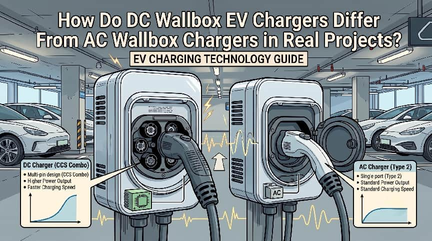
The fundamental difference between these two technologies lies in where the power conversion happens. An AC unit acts primarily as a smart supply point, relying on the onboard hardware inside the vehicle to convert energy. In contrast, a DC wallbox EV charger performs this conversion internally before delivering electricity directly to the vehicle's battery. Because this high-power conversion occurs outside the vehicle, the hardware requires more robust cooling and internal power electronics. We observe that this distinction significantly influences the complexity of the site wiring and the protection equipment we install during the initial setup.
Infrastructure Demands and Grid Capacity
Infrastructure requirements vary sharply based on which technology a site adopts. An AC installation typically draws power at a slower, more predictable rate, which allows it to integrate with existing facility capacity more easily. When we deploy a dc wallbox EV charger, the infrastructure demands are usually higher because of the increased power throughput required for faster energy transfer. This often necessitates upgrades to the site's electrical panels and the implementation of sophisticated energy management software to ensure the grid remains stable during peak usage. UUGreenPower emphasizes the importance of performing a thorough site load assessment before finalizing the hardware specifications.
Project Scalability and User Charging Experience
The final impact on the user depends heavily on the project goals and the time allocated for each stop. For locations where vehicles remain parked for extended periods, such as homes or workplace parking lots, AC hardware provides a steady and sufficient replenishment rate. However, for commercial environments where higher turnover is expected, the faster delivery of energy provided by specialized direct current equipment becomes a requirement. We focus on balancing these hardware choices with the project's physical layout and power constraints to maximize the utility for every driver while maintaining a reliable service.
Summary of Implementation Considerations
Deciding between these charging architectures involves assessing the specific power needs of the site against the technical capabilities of the hardware. While AC solutions offer simplicity for longer dwell times, higher-capacity direct current options offer the necessary throughput for high-traffic scenarios. By evaluating the electrical requirements, site infrastructure, and user behavior patterns, we can ensure that every installation provides stable and predictable service. Relying on accurate technical data allows us to build durable infrastructure that serves the community effectively over many years.
Why Are Wallbox EV Chargers Important for Commercial Charging Operators?
2026-06-09 NextHow Do EV Charging Wallbox Help Manage Grid Load Demand?
2026-06-09

