
2026-05-20
UUGreenPower
0
High-speed charging infrastructure is moving toward a more unified hardware approach to keep up with global demand. When we look at how chargers are built, the physical layout of an ev charging module is rarely a random choice. Standardized dimensions allow manufacturers to create power cabinets that are compatible with various components, ensuring that the internal architecture remains organized and efficient. We believe that focusing on these uniform designs helps the entire industry scale faster while maintaining high reliability across different charging sites.
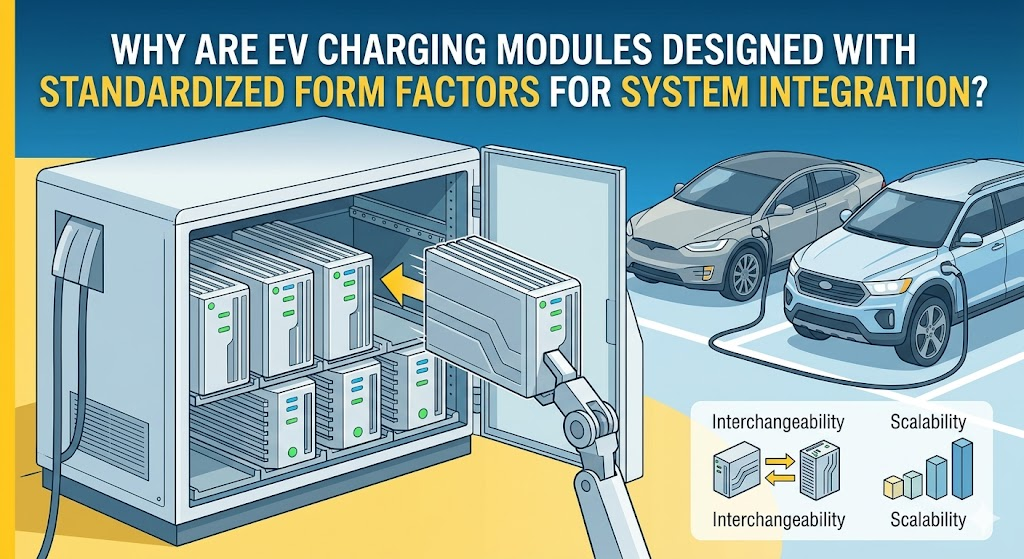
Simplified Maintenance and Swapping
One of the primary reasons for uniform sizing is the ease of service in the field. When an ev charging module follows a standard form factor, technicians can replace a faulty unit in minutes without needing custom tools or complex mounting brackets. This "plug-and-play" capability is essential for operators who need to minimize downtime at busy charging hubs. By keeping the footprint consistent, we ensure that the internal airflow and electrical connections remain predictable, which prevents overheating and extends the life of the overall station hardware.
Streamlining Power Cabinet Assembly
Building a high-power charger requires stacking multiple units to reach desired outputs, and having a fixed shape makes this process much easier. A standard ev charging module fits into a specific slot within a rack system, much like a server in a data center. This level of consistency allows for better space utilization inside the cabinet, leaving more room for cooling systems and safety switchgear. At UUGreenPower, we see how this structural logic allows engineers to focus on software and thermal management rather than constantly redesigning the metal housing for every new project.
Future-Proofing Infrastructure Investments
Adopting common physical standards protects the long-term value of the charging station itself. If the technology inside an ev charging module improves, the owner can simply slide out the old units and slide in newer, more efficient versions without tearing down the entire structure. This flexibility is vital as battery voltages rise and charging speeds increase. Because the industry sticks to these form factors, UUGreenPower can help partners upgrade their existing sites with minimal physical labor, ensuring that older cabinets remain useful and functional for years to come instead of becoming obsolete.
The move toward standardized shapes is not just about aesthetics; it is a practical necessity for a maturing market. By sticking to these established form factors, the industry ensures that system integration is faster, maintenance is less of a headache, and hardware remains adaptable to future changes. It creates a stable foundation where power density can grow without forcing a total redesign of the charging landscape. Consistent design choices are what allow the network to expand reliably, supporting a smoother transition for fleets and individual drivers alike.
What Defines the Performance Boundaries of an EV Charging Module in High-Power DC Systems?
2026-05-19 NextManaging Voltage Conversion for Diverse EV Battery Architectures
2026-05-21

