
2026-06-01
UUGreenPower
0
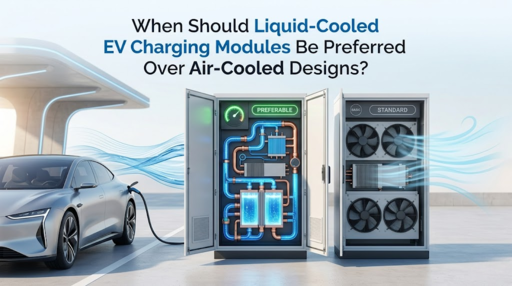
High-traffic charging stations and heavy-duty industrial sites often push hardware to its physical limits. While standard ventilation works for many setups, the specific environment of your project dictates whether an ev charging module will last five years or ten. At UUGreenPower, we see that the shift toward higher power density and faster turnover is making thermal management a central conversation for operators. When heat buildup becomes a bottleneck for performance, switching to a more advanced cooling method is no longer just an option—it becomes a necessity for maintaining consistent uptime.
Handling Extreme Environmental Challenges
Dust, salt spray, and high humidity are the silent killers of electronic components in coastal or desert regions. Since a liquid-cooled ev charging module is completely sealed, it prevents corrosive particles and moisture from entering the internal circuitry, which is a common failure point for air-cooled units. We find that in locations with poor air quality or extreme ambient temperatures, the ability to isolate the power electronics from the outside world significantly extends the equipment's lifespan. By removing the need for high-speed fans that suck in debris, the system remains protected from the elements while maintaining a steady operating temperature.
Achieving Higher Power Density in Small Spaces
Urban charging hubs and compact depots often face severe spatial constraints that make massive air-cooled cabinets impractical. A liquid-cooled ev charging module offers a much higher power density because liquid is far more efficient at carrying heat away than air. This allows us to pack more kilowatt capacity into a smaller footprint without worrying about the thermal throttling that occurs when air-cooled racks are spaced too closely together. For developers looking to maximize the charging capacity of a small parking lot or a narrow curbside installation, the compact nature of these modules provides a clear path to scaling up power without expanding the physical site.
Reducing Noise Pollution and Maintenance Needs
Quiet operation is frequently overlooked until a charging station is installed near a residential area or a luxury hotel. Because a liquid-cooled ev charging module does not rely on the loud, high-pitched fans required to move massive volumes of air, the noise footprint of the entire station drops dramatically. Furthermore, the absence of air filters means there is nothing to clog, which slashes the frequency of onsite technician visits. We believe that reducing these physical points of failure is the most effective way to lower long-term operational burdens, especially in remote locations where sending a repair crew is both difficult and expensive.
Deciding between cooling technologies comes down to the specific stresses of your site and your long-term reliability goals. While air cooling serves many basic needs, liquid-cooled designs excel when durability, silence, and high power output are the primary requirements. At UUGreenPower, we focus on providing hardware that matches the reality of the field, ensuring that your infrastructure can handle the heat of continuous, high-speed use. Choosing the right ev charging module today ensures that your network stays operational through the harshest summers and the most demanding fleet schedules. When performance cannot be compromised, moving toward a sealed, liquid-cooled solution provides the resilience that modern electric transport demands.
How Does Digital Control Improve the Efficiency of EV Charging Modules?
2026-05-31 NextWhere Do EV Charging Modules Fit Within Energy Storage and Microgrid Systems?
2026-06-01

