
2026-06-03
UUGreenPower
0
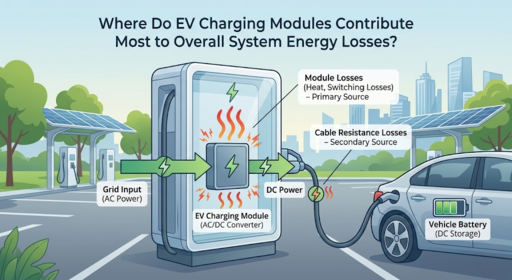
Efficiency remains the primary focus when building high-performance charging infrastructure, as every lost watt translates into higher operating expenses and wasted resources. When we analyze the conversion chain, the ev charging module is where the majority of electrical energy transitions from AC to DC, making it the focal point for potential losses. These losses usually manifest as heat, resulting from the internal resistance and switching processes within the hardware. At UUGreenPower, we concentrate on identifying these friction points to ensure that as much energy as possible reaches the vehicle battery. By narrowing down where these inefficiencies occur, we can design hardware that stays cool and performs better under heavy pressure.
Identifying Switching and Conduction Losses
Most energy dissipation within an ev charging module happens during the rapid opening and closing of power transistors. Every time a switch toggles to regulate voltage, a small amount of energy escapes as heat, a phenomenon known as switching loss. Furthermore, conduction losses occur when electricity flows through the copper traces and internal components that have inherent resistance. We address these issues by using high-quality semiconductors that offer lower resistance and faster reaction times. This technical focus helps reduce the amount of power that "leaks" away during the conversion process, ensuring that the station operates at peak performance even when delivering high current to a vehicle.
Managing Magnetic and Core Dissipation
Internal transformers and inductors are essential for voltage regulation, but they are also common sites where an ev charging module can lose significant energy. Magnetic losses occur within the cores of these components as they are subjected to high-frequency electromagnetic fields. If the core materials are not optimized, they can become hot and inefficient, pulling energy away from the actual charging task. We focus on utilizing premium magnetic materials and winding techniques that minimize these eddy currents and hysteresis losses. By keeping the magnetic path efficient, we ensure that the energy transfer remains clean and stable, which is vital for maintaining high efficiency across the entire power range.
Addressing Auxiliary Power Consumption and Cooling
Supporting the primary function of an ev charging module requires auxiliary power for control circuits, sensors, and cooling fans. While these might seem like minor draws, they contribute to the constant baseline energy loss of a charging station, especially during standby or low-load periods. We design our control logic to consume as little power as possible and use variable-speed fans that only pull the necessary energy to maintain safe temperatures. This balanced approach to thermal management prevents the cooling system itself from becoming a major drain on the total power budget. UUGreenPower aims to keep these peripheral losses to a minimum, ensuring that the primary goal of efficient power delivery is never overshadowed by the needs of the supporting hardware.
Reducing energy waste is a continuous process of refinement and technical observation. An ev charging module that is engineered to mitigate switching, magnetic, and auxiliary losses provides a more sustainable foundation for any charging network. By focusing on these specific areas, we help operators lower their energy consumption and improve the overall lifespan of their equipment. These improvements lead to a more reliable system that can handle the high demands of the commercial market without unnecessary overhead. Maintaining a tight grip on energy flow ensures that the transition to electric transport is both environmentally responsible and operationally sound for the long term.
Balancing Reliability with Redundant EV Charging Module Integration
2026-06-03 NextWhich Materials Are Commonly Used to Enhance Durability in EV Charging Modules?
2026-06-03

