
2026-06-04
UUGreenPower
0
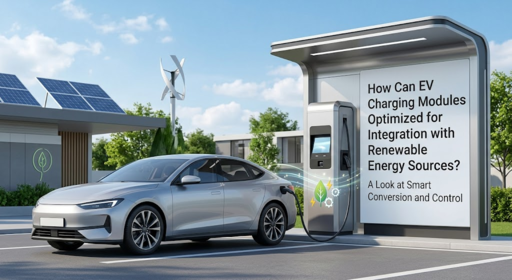
Achieving a truly green transport network requires more than just electric cars; it demands a seamless handshake between the grid, sun, wind, and the hardware that connects them. When we look at the role of an ev charging module, its primary job is to handle the conversion process with as much agility as possible. Renewable energy is notoriously intermittent, with power levels rising and falling based on weather conditions. To account for this, the internal logic of the unit must be capable of high-speed communication with energy management systems. By doing so, the hardware can throttle its intake or output based on the availability of clean energy, ensuring that the local grid remains stable while maximizing the use of carbon-free electricity.
Dynamic Voltage Adjustment for Solar and Wind
Directly linking power generation to the vehicle requires a level of flexibility that older systems simply cannot provide. We focus on ensuring that each ev charging module can operate across a wide range of input voltages to accommodate the natural fluctuations of solar arrays. When the sun is at its peak, the module needs to safely process high DC voltages, but it also must remain efficient during the late afternoon when production dips. This wide-range capability prevents the system from tripping or shutting down during minor power sags. By maintaining steady operation across these variables, the infrastructure becomes far more resilient and capable of handling the erratic nature of weather-dependent power sources.
Enhancing Efficiency Through Bidirectional Capabilities
Sustainability often relies on the ability to move energy in more than one direction, turning the vehicle into a temporary storage unit. An optimized ev charging module is increasingly designed to support bidirectional power flow, allowing energy to move from the car back to the building or the grid when renewable production is low. This creates a balanced ecosystem where stored energy can offset peak demands. At UUGreenPower, we emphasize the importance of low energy loss during these double-conversion processes. If the hardware is not highly efficient, the benefits of using renewable energy are partially lost to heat, making the overall environmental impact less significant than it could be.
Intelligent Communication and Load Balancing
Smart integration is less about the raw wires and more about the data flowing through them. A modern ev charging module acts as an intelligent node within a larger network, constantly reporting its performance metrics to a central controller. This allow the system to perform load balancing, distributing available green energy across multiple dispensers without overloading the local transformer. If a cloud passes over a solar farm, the modules can instantly reduce their power draw in a synchronized fashion. This level of granular control is what allows large-scale charging hubs to operate entirely on wind or solar without risking a total blackout or requiring massive, expensive upgrades to the utility connection.
Creating a synergy between charging hardware and clean energy is a technical challenge that requires constant refinement of power electronics. As we continue to develop these systems at UUGreenPower, the focus remains on making the conversion process as transparent and efficient as possible. The goal is to move toward a future where the source of the electricity is as clean as the vehicle itself. By prioritizing wide voltage ranges, bidirectional support, and smart data sharing, the industry can build a network that is not only functional but also truly sustainable for decades to come. Careful optimization at the component level is the only way to ensure that renewable energy reaches the road without unnecessary waste.
Which Materials Are Commonly Used to Enhance Durability in EV Charging Modules?
2026-06-03 NextWhat Are DC EV Charging Modules and How Do They Work?
2026-06-05

