
2026-07-09
UUGreenPower
0
As we advance the global transition to sustainable mobility, the physical robustness of power electronics has become as critical as electrical efficiency. When designing outdoor infrastructure, the environmental survivability of internal components determines the overall lifespan and stability of the entire station. A common question we encounter from infrastructure operators involves the actual functional benefits of high-ingress protection levels in power conversion hardware. Specifically, the adoption of an EV charging module with verified ingress ratings is no longer optional for sites exposed to the elements.
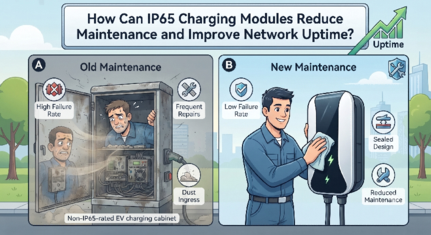
The Engineering Reality of an IP65 Charging Module
The primary function of an ingress protection rating is to provide a standardized metric for environmental resilience. An IP65 classification indicates that the enclosure is fully dust-tight and shielded against water jets projected from any direction. For core power components, this means that fine particulates cannot bypass the casing to settle on sensitive printed circuit boards, and internal assemblies remain protected during routine site maintenance or heavy precipitation.
By utilizing an IP65 charging module, manufacturers effectively eliminate common failure points caused by moisture accumulation or conductive dust buildup. This physical defense mechanism ensures that internal electronics maintain their thermal performance even in harsh atmospheric conditions. Our engineering focus ensures that these protective measures do not compromise the heat dissipation efficiency required for high-speed energy transfer during continuous operation in outdoor, public-facing, or industrial deployment sites where environmental resilience is absolutely mandatory.
Why Durability Matters for Infrastructure Reliability
Reliability remains the cornerstone of successful charge point deployment. In field conditions, temperature fluctuations often lead to internal condensation, while wind-driven dirt can infiltrate standard vented housings. By integrating hardware designed to meet rigorous sealing standards, operators ensure that power conversion stays active even when atmospheric conditions are suboptimal. We emphasize that internal stability requires this level of physical shielding to prevent intermittent ground faults or electrical short circuits.
An EV charging module engineered with these specifications offers a significant buffer against the unpredictability of outdoor site environments. Instead of relying solely on the outer cabinet for protection, the internal power units themselves serve as the final line of defense against the environment. This dual-layered strategy allows infrastructure managers to maintain high availability metrics despite exposure to humidity, rain, or airborne pollutants in diverse geographic locations across the globe, ensuring maximum operational continuity for station owners.
Operational Benefits for Network Managers
For those managing large-scale networks, the return on investment extends beyond the initial purchase. Reducing the frequency of site visits for cleaning or repairing corroded components significantly lowers long-term operational expenditures. When core electronics are shielded inside an IP65 charging module, the necessity for complex, external protective shelters is often mitigated, allowing for more streamlined station architecture. This simplifies the physical layout for maintenance crews while increasing the reliability of the entire network.
We observe that stations equipped with robust internal components demonstrate higher uptime metrics, which directly supports the business goals of utility providers and operators who prioritize consistent service delivery across their entire footprint. By reducing physical degradation at the component level, networks remain functional for longer periods. This resilience is essential for satisfying the uptime requirements of automakers and the convenience demands of vehicle drivers who expect charging access, fostering increased customer loyalty and satisfaction.
Strategic Integration and Future Proofing
The move toward more durable hardware reflects a broader shift in the energy sector toward long-term asset management. Integrating an IP65 charging module allows developers to build systems that survive diverse climates, ranging from humid coastal regions to dry, dusty industrial parks. This level of environmental adaptability is essential for UUGreenPower as we continue to support our global partners. By grounding your infrastructure in high-performance, shielded hardware, you ensure that your investment remains operational for the duration of its projected lifecycle.
Successful deployment relies on anticipating the environmental stresses that hardware will encounter throughout its operational years. When components are built with a focus on containment, the potential for oxidation on connectors and internal circuitry is drastically minimized. This approach allows developers to maintain performance benchmarks even in regions where extreme weather might otherwise necessitate frequent replacements. This foresight is a fundamental part of the technical support we provide to our international client base, ensuring sustained performance excellence.
Sustaining Long-Term Performance
At UUGreenPower, we advocate for prioritizing component durability as a standard design philosophy. By specifying an EV charging module that satisfies stringent sealing requirements, you protect the high-frequency power electronics from the most common environmental hazards. This proactive approach to hardware selection simplifies maintenance schedules and enhances the overall reliability of the charging network. As we continue to refine our power electronics, UUGreenPower remains dedicated to providing the core hardware that allows our partners to deliver consistent, efficient energy replenishment to drivers worldwide, reinforcing the stability and success of every charging station project implemented across global infrastructure markets.
Why Liquid Cooling Is Shaping EV Fast Charging
2026-07-09 NextHow to Choose Liquid Cooling Charging Modules
2026-06-06

