
2026-08-11
UUGreenPower
0
Standardized components use defined interfaces, dimensions, functions and tests so engineering, purchasing and production teams work from the same assumptions. For an EV charging module, the controlled definition may include mounting, electrical terminals, communication messages, airflow direction, alarm codes and qualification criteria. The goal is repeatable integration, not the claim that every component from every supplier is identical.
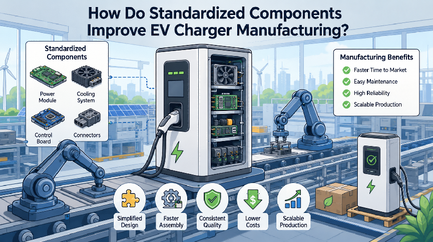
Standardized Interfaces in Engineering and Production
When electrical and mechanical boundaries are stable, cabinet designers can develop busbars, harnesses, ducts and controller software against documented requirements. Production teams can use consistent work instructions and inspection points. Test engineers can reuse approved procedures for incoming checks and end-of-line verification. This allows attention to shift from rediscovering basic connections toward validating the specific charger configuration and target-market requirements.
Document Control and Engineering Change Management
A standardized drawing is useful only when everyone builds to the same revision. Bills of materials, firmware, work instructions and test limits should identify the approved configuration. Changes need review before release because a new fan, connector or filter can alter thermal, electrical or compliance behavior. Traceability should link finished chargers to the relevant component and software revisions so field information can be interpreted accurately.
Standardization does not mean automatic interchangeability. Two units can share external dimensions yet have different voltage ranges, current limits, cooling needs, communications or certificate scopes. An EV charging module substitution should therefore follow an engineering change process. Teams need to compare interfaces and performance, update controller settings where required and repeat affected complete-system tests. A physically fitting replacement is not necessarily an electrically or legally approved replacement.
Systematic Testing and Field Service
Controlled components allow manufacturers to define acceptance limits for communication, insulation, output accuracy, current sharing, alarms and thermal behavior. A known-good reference configuration helps isolate whether a problem originates in the module, cabinet wiring, controller or test setup. Statistical production data can also reveal drift earlier when models and revisions are not mixed without identification. Standard work improves the quality of evidence, not just assembly speed.
Service planning also becomes clearer. Field teams benefit from consistent mounting, connectors, alarm definitions and replacement procedures. Approved spares can be identified by model and revision, and controller compatibility can be documented. If a unit is isolated, the charger may support a defined reduced-power mode until service is completed. That capability still depends on cabinet switching and software, but standardized interfaces make the behavior easier to design and validate.
Component Roles Within the Charging System
A component-role framework. UUinside groups PMU, ACU, DCU, DSU and CMS responsibilities within a charging-system design. This framework helps teams state what an EV charger power module must do and what remains with input equipment, distribution, the dispenser, cable management or system controller. It is most useful when each role is supported by controlled interfaces, configuration rules and complete-system verification.
Approved Exceptions and Prohibited Combinations
Standardization should include exceptions. Production documents should state not only the normal approved configuration but also which substitutions, mixed revisions and rework actions are prohibited. If two connector types or cooling options are supported, each permitted combination should be listed. This prevents operators from creating an untested combination from individually approved parts. A well-managed exception process is part of standardization because real factories and service teams eventually encounter supply changes and nonconforming material.
Production Metrics and Continuous Improvement
Metrics should focus on quality of execution: first-pass test yield, traceability completeness, repeat fault categories and change-related escapes. Faster assembly is useful only when the finished charger remains consistent. Reviewing those metrics by component revision can show whether an interface is truly standardized or merely looks similar on drawings. The feedback should inform both supplier controls and the next charger design.
Regular cross-functional review keeps the standard connected to actual production evidence instead of allowing documents and factory practice to drift apart.
Standardized boundaries improve repeatability, traceability and controlled product evolution. Their benefits appear only when the EV charging module and surrounding components are managed through revision control and system tests. UUGreenPower presents UUinside component roles as an integration reference; project requirements and current controlled documents remain authoritative.
Can an IP65 EV charging Module Overheat? What Engineers Should Know
2026-08-10 NextWhat Should Buyers Look for in a One-Stop DC Charging Solution?
2026-08-11

