
2026-10-30
UUGreenPower
0
System integrators face rigorous technical requirements when deploying high-power infrastructure across diverse markets, particularly within the highly regulated Australian energy sector. Validating the actual output capabilities of charging equipment remains a critical step for passing initial grid connection audits imposed by local distribution network service providers.
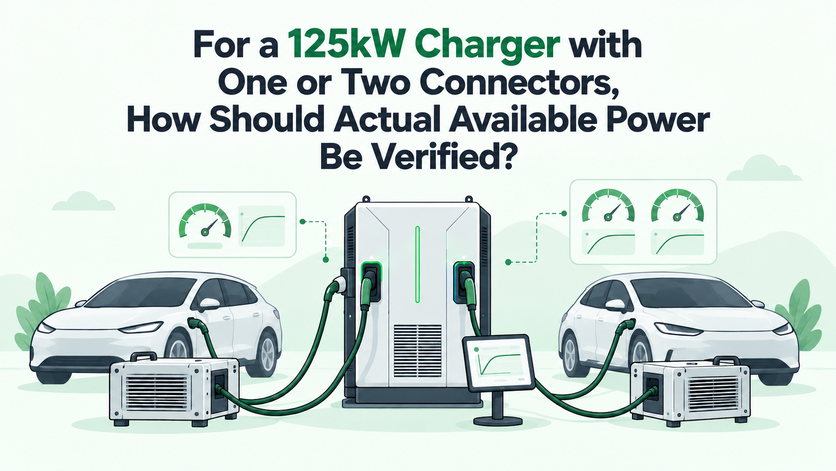
Operators must thoroughly understand how power delivery behaves under varying load conditions before public deployment. Establishing clear testing methodologies for different connector configurations helps engineering teams verify performance without unexpected delays. At UUGreenPower, our technical architecture is designed to support straightforward capacity testing across various operational modes.
Accurate verification directly impacts operational planning and long-term site viability in regions with strict energy management frameworks. Facility managers need precise data to calculate return on investment and schedule routine maintenance cycles. By standardizing the evaluation process, project managers can align their deployment schedules with local utility inspection timelines.
Australian Grid Compliance and Power Derating Baselines
Australian electricity grids impose strict limitations on transient loads and peak power demands to maintain overall network stability. Connecting heavy infrastructure requires engineers to demonstrate detailed power derating profiles and advanced load management capabilities to satisfy local regulatory bodies.
Utility companies evaluate whether new installations might overtax local distribution transformers during periods of peak demand, especially in regional or remote Australian areas. Documenting these specific electrical parameters helps confirm that the hardware operates safely under sustained operational stress.
Relying on adaptable power electronics allows site technicians to map out expected energy delivery patterns accurately for Australian inspectors. Our engineering framework supports integrators in measuring how equipment responds to extreme external temperature shifts typical of the Australian climate and varying input frequencies. Documenting these baseline metrics provides the necessary data for utility authorities reviewing grid connection applications. A systematic approach to initial capacity evaluation mitigates the likelihood of failing preliminary site audits.
Evaluating Single-Connector Maximum Output
Activating a single connector shifts the testing focus entirely toward sustained maximum power delivery. Field technicians must determine if internal contacts, cooling systems, and external cables manage high currents over extended periods. Evaluating a standard 125kW charger involves confirming that the core power blocks maintain stable electromagnetic compatibility under peak loads to meet local standards. Objective measurements demonstrate whether the hardware manages thermal stress while maintaining consistent output voltage.
To conduct these assessments, engineers typically connect specialized resistive load banks to the physical hardware. Measuring exactly 650 by 2150 by 1000 millimeters and weighing 320kg (excluding cable management), our modular system is tested for heavy, continuous vehicle requests. Controlled environments give inspectors the ability to monitor internal heat dissipation independently of vehicle software limitations. Recording thermal stability metrics provides essential documentation for finalizing site electrical safety reports.
Assessing Dynamic Allocation in Dual-Connector Modes
The verification workflow changes significantly when a second load is introduced, requiring immediate energy redistribution. Site engineers need to evaluate how the main control board divides available capacity between two active charging sessions to prevent tripping local circuit breakers. The testing process examines whether the system splits power evenly or allocates current proportionally based on real-time battery requests. Accurate dynamic load balancing mitigates excessive strain on the site's electrical feed while maintaining functional user throughput.
Validating this complex control logic usually involves running simultaneous sessions with dual synchronized load banks. Operators record the precise transition times as the internal matrices shift current from the primary connection to the secondary port. Implementing commercial EV charging solutions with UUGreenPower components requires documented evidence that these transitions occur without causing disruptive voltage drops. Grid authorities review this operational data before approving unrestricted multi-port public usage across the network.
Communication latency between the charging module and the simulated vehicle management systems is carefully measured during these tests. The equipment is designed to respond to fluctuating power demands and help manage changes in load conditions. Collecting performance data can help integrators assess how the logic board handles different load scenarios.
Applying Modular Verification Across the Portfolio
Conducting full-scale capacity tests on-site becomes more manageable when core internal electronics are validated during manufacturing. We support localized validation procedures through UUinside, our dedicated service platform providing standard components and system design frameworks. Using this platform helps integration partners incorporate pre-tested power modules into customized enclosures that meet Australian structural requirements. Baseline factory testing demonstrates that the core electronics function according to their designated specifications prior to field installation.
This modular verification logic scales efficiently across the portfolio, supported by the UUinside platform for diverse footprint requirements. For example, our 50kW small DC station (UC50K1000-AY2-CCS2) utilizes the same core verification principles. Featuring a 1800 by 380 by 300-millimeter stand column and a 65kg profile, it requires identical dynamic load testing when allocating power across connectors. Relying on established component ratings rather than designing new high-voltage testing protocols simplifies local compliance.
Structuring the Final Site Commissioning Process
Site commissioning relies heavily on the objective data collected during these specific evaluations. Structured testing boundaries provide grid operators with accurate measurements regarding the maximum potential site power draw. Regional approvals for a 125kW charger may involve consideration of whether the internal electrical logic has undergone prior validation, depending on local regulatory requirements. Organized verification methodologies help prevent administrative delays during the final stages of the project timeline.
Our technical focus involves developing hardware that facilitates clear and measurable performance testing. Providing rigorously evaluated electrical modules helps regional teams address complex compliance requirements systematically. UUGreenPower evaluates the potential impact of customized external housings on fundamental power operations as part of the design and validation process. Supplying a well-documented technical foundation empowers local engineering teams to deploy reliable commercial EV charging solutions globally.
What Does a Local Factory Need Before Assembling a 125kW Charger?
2026-10-30 NextHow Can Residential ESS Brands Add a 7kW V2X Hybrid Converter to an Existing Energy Storage System?
2026-11-02

